ECOLOGICAL PERMEABILITY
Designing a nature-inclusive neighborhood is one thing. Demonstrating that the neighborhood actually functions ecologically is another. At Happy Days, that is exactly what we are trying to do: by measuring, observing, and, where necessary, critically reassessing our own design choices.
Together with ERA Contour, Ecogroen, and the residents themselves, we are investigating whether the design principles we have applied actually result in ecological and social added value. Over the course of two years, an article about this research will regularly be published on our website. This time, we focus on the design principles that enable animals to move easily through the neighborhood.

Happy Days: ecological permeability
A residential neighborhood that feels open and accessible to people can be full of barriers for animals. A curb, fence, or parking lot that we barely notice can make the difference for a small animal between a connected habitat and a collection of isolated islands. That is why, at Happy Days, we are not only exploring which habitats emerge in the neighborhood, but also how animals can move between them. After all, nature-inclusive design is not only about creating places where species can live, but also about creating connections between them. This movement is crucial in determining whether species can disperse, find food, and ultimately establish sustainable populations.
In our previous article, the count stood at more than 160 different species. By now, more than 300 species have been observed, including the kingfisher, several fish species, and the protected natterjack toad. This is giving us increasingly more information to explore the question: which design choices make a neighborhood ecologically permeable, and which instead contribute to habitat fragmentation?
The green inner landscape
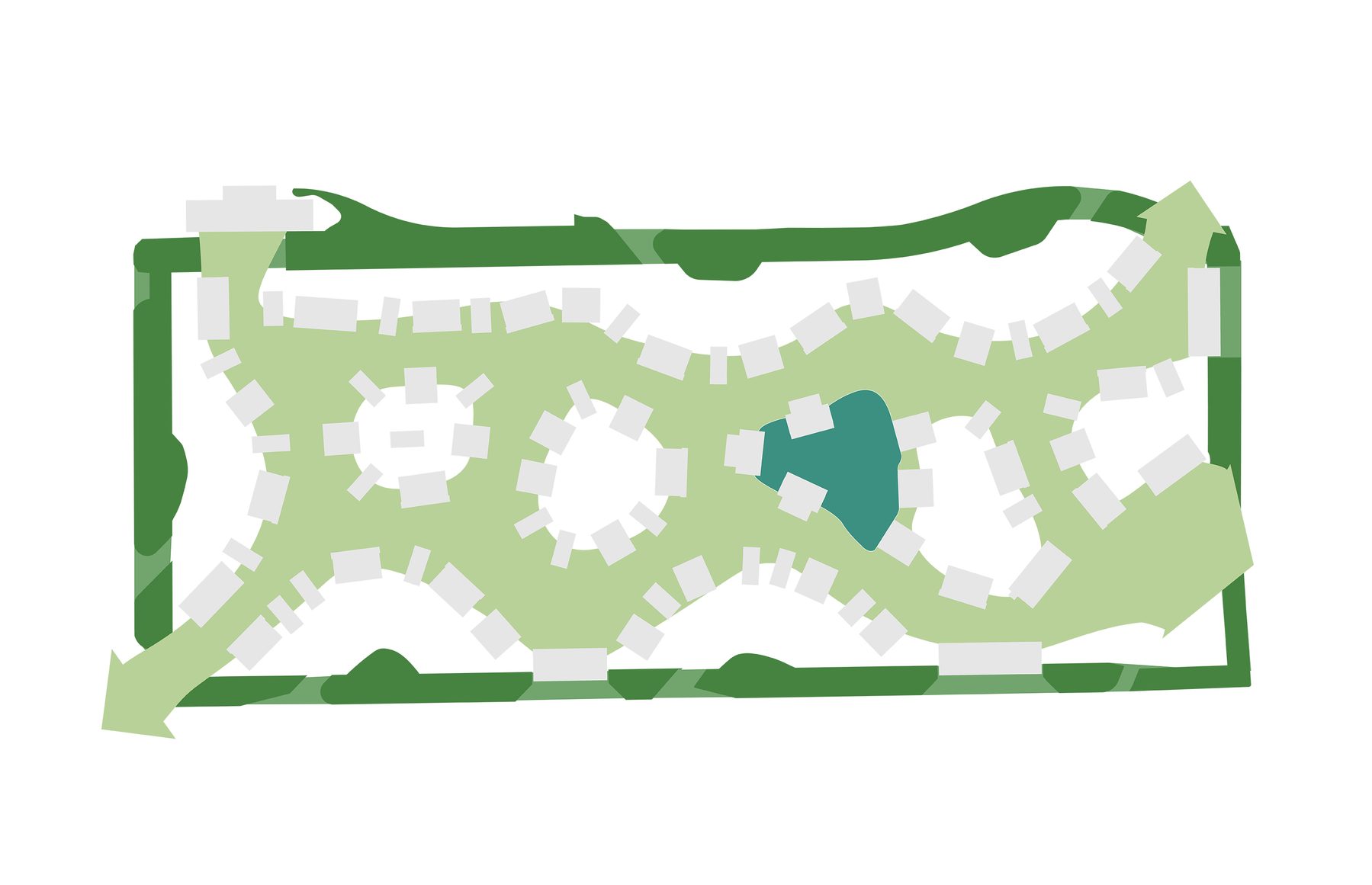
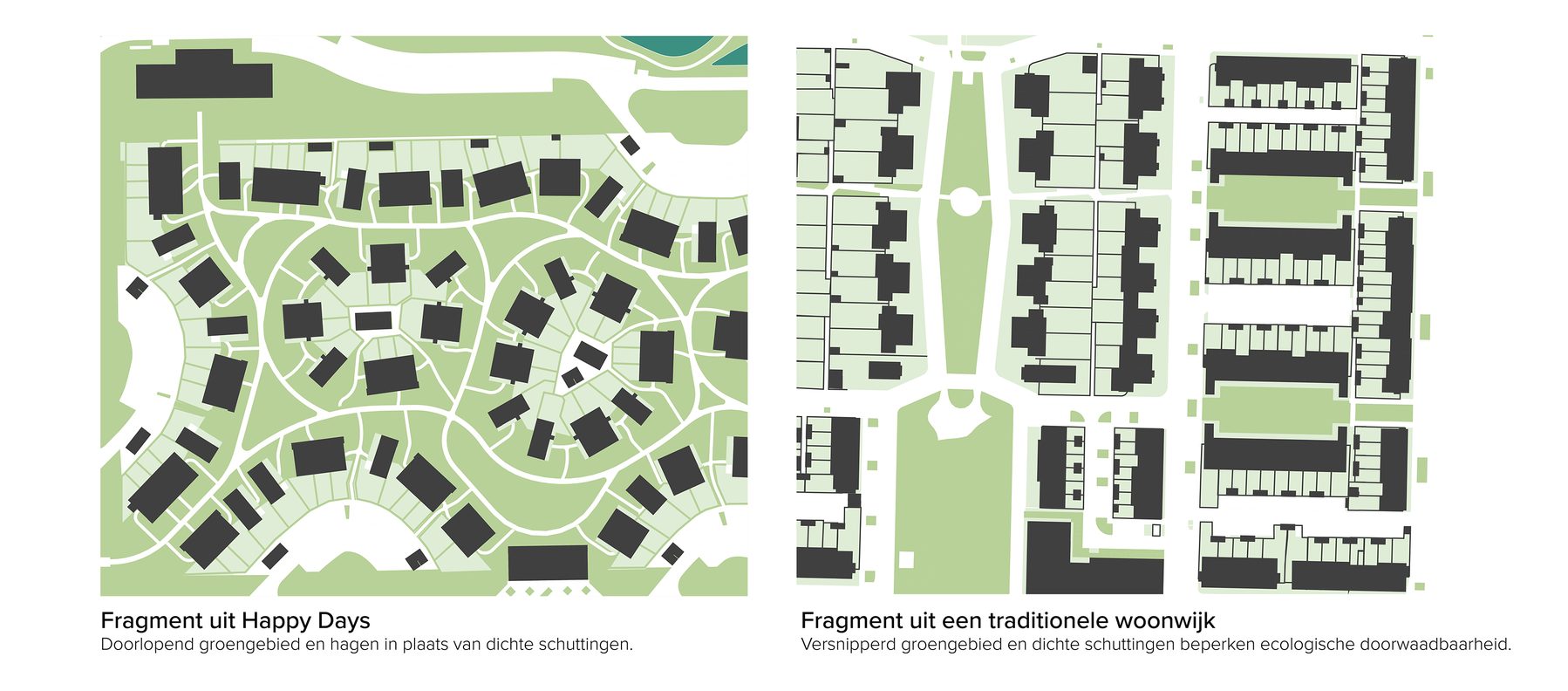
Perhaps the most defining design choice in Happy Days concerns the distribution of greenery. Rather than being divided into separate green spaces and planting beds, the greenery forms one continuous inner landscape. This is in contrast to a more conventional residential neighborhood, where green space is often fragmented into a collection of islands between roads, parking spaces, sidewalks, and private gardens. A tree stands in a tree pit, a planting bed is bordered by a curb, and a fence separates two gardens. For a bird flying overhead, this may not pose a major problem, but for species that move across or close to the ground, the same neighborhood can look full of barriers.
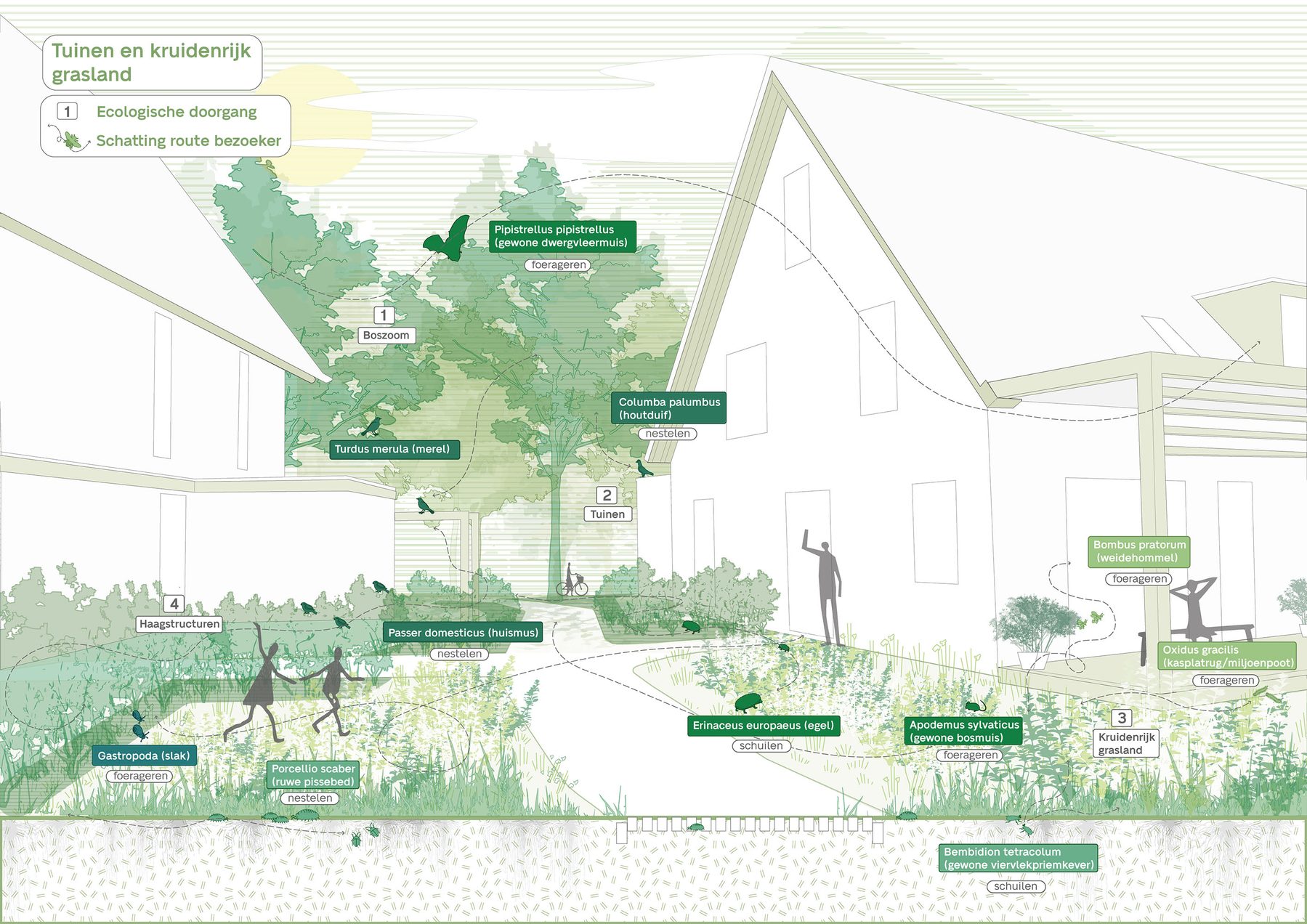
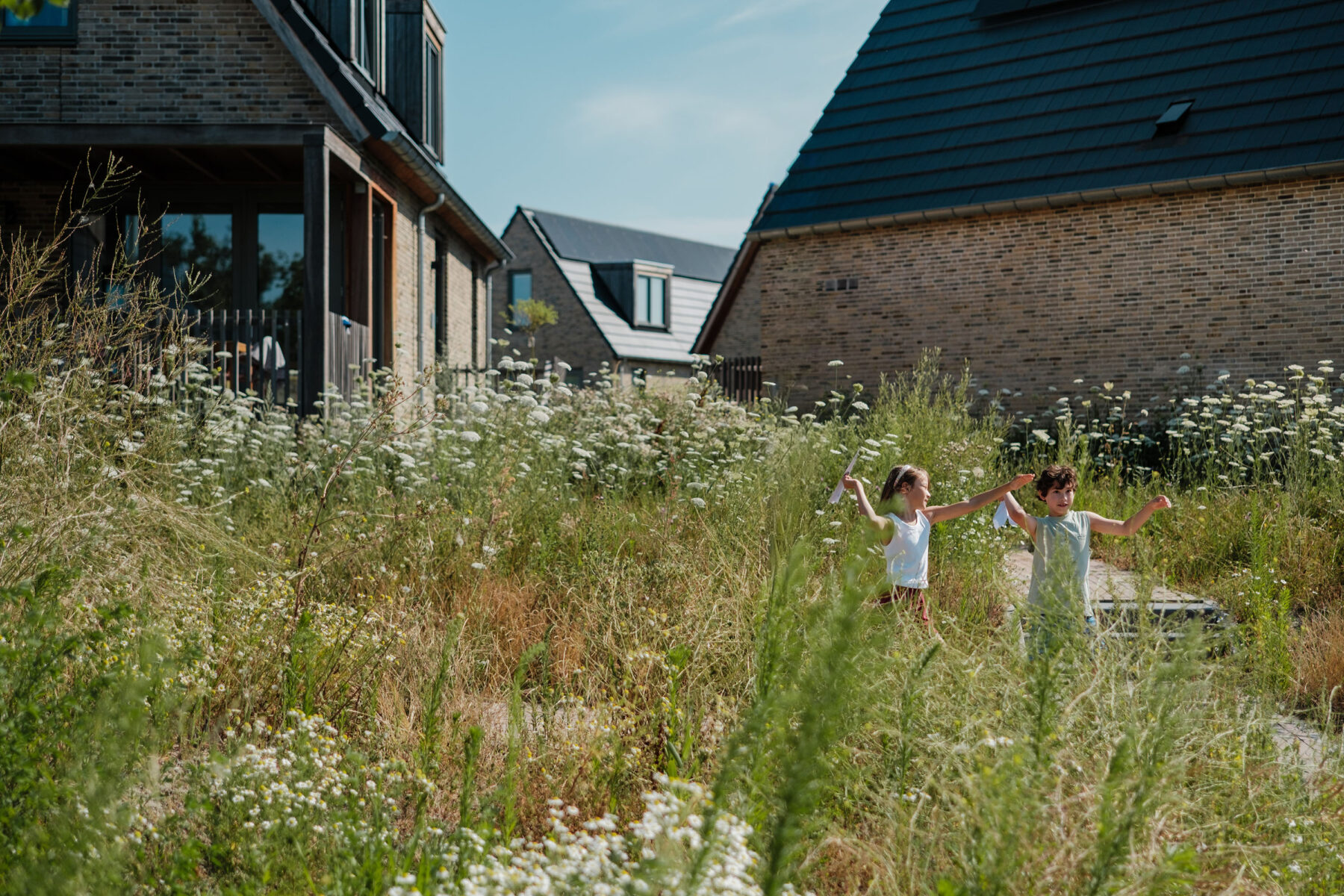
In Happy Days, the different habitats are instead directly connected and gradually merge into one another. Herb-rich grassland transitions into the gardens, which in turn border the woodland edge. This allows animals to carry out much of their daily and seasonal movements without having to cross a road, fence, or high curb.
Take the common frog, for example: it finds food in the gardens, moves underneath the hedges (there are no fences) to the shrubs in the green area where it overwinters, and lays its eggs in the pond. All without crossing a single road, curb, or fence. Or take the hedgehog, which has now been spotted four times and overwinters along the woodland edge while searching for food in the gardens. For the Icarus blue butterfly, one of the most frequently observed species with thirteen sightings, permeability is less about physical barriers and more about the presence of a continuous network of flower- and herb-rich habitats.
This immediately shows that ecological permeability means something different for every species. While a hedgehog mainly needs an opening beneath a property boundary, a butterfly looks for a succession of suitable plants, while a bat uses green corridors and water edges to move through the landscape.
Of course, a residential neighborhood cannot function without infrastructure. In Happy Days too, cars need somewhere to drive and park. The choice to keep the inner landscape as green as possible therefore has a consequence: much of the infrastructure has been moved to the outer edge of the development. Parking spaces and the access road together form a kind of ring around the neighborhood.
From an ecological perspective, this is an interesting trade-off. On the inside, a large area with few barriers is created, while on the outside, the transition to the surrounding landscape becomes more abrupt. For species that move along the ground in particular, this edge can form an obstacle.
This raises an important design question for future projects: if you consolidate infrastructure in order to prevent fragmentation within a development, how do you then design enough safe connections through that infrastructure?
The pond
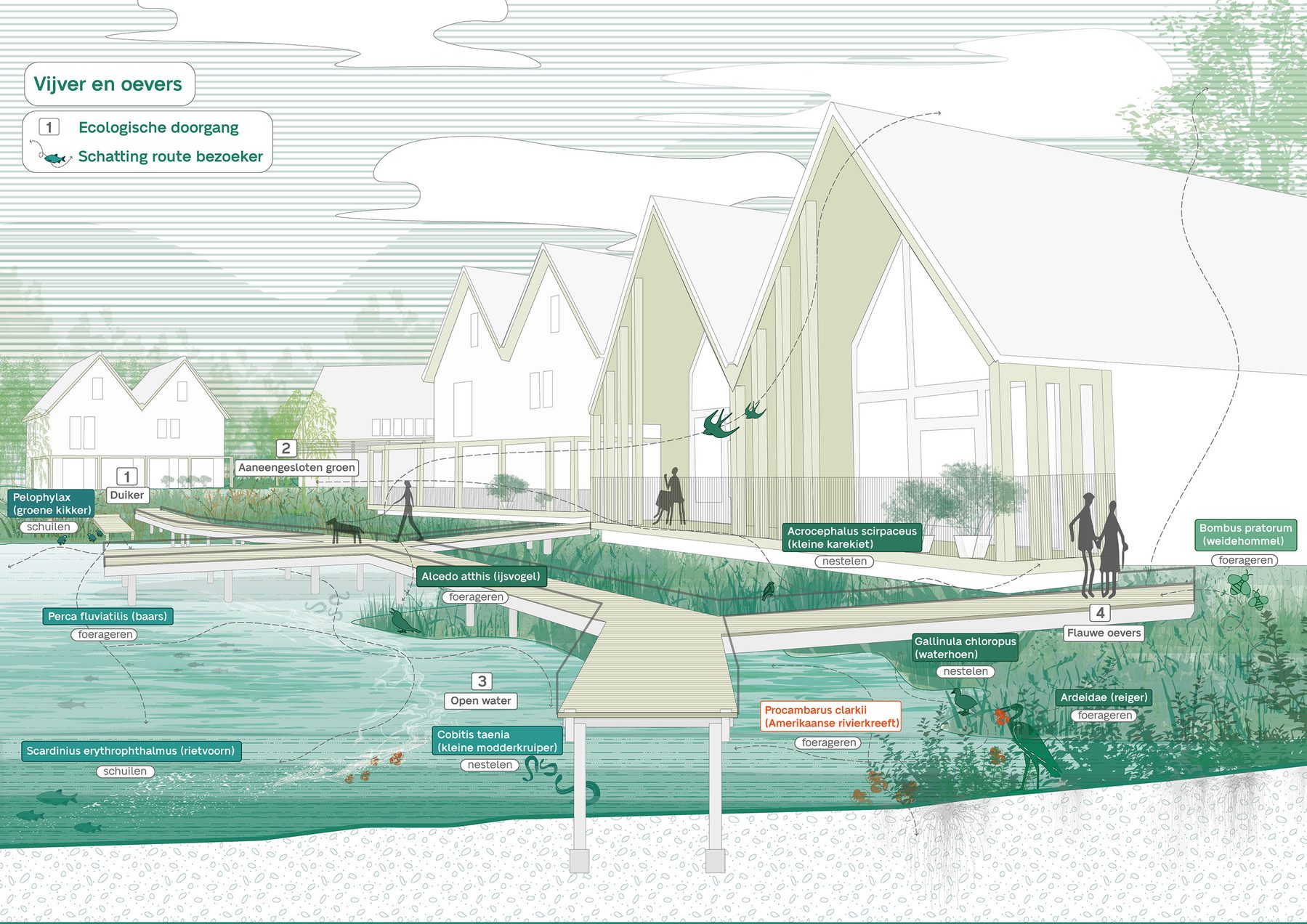
In our previous article, we concluded that the pond habitat was lagging behind in its development, presumably because of the long culvert connecting the water network to the surrounding waterways. We can now revise that assessment. Observations of five fish species – the spined loach (protected), perch, roach, rudd, and tench – show that the culvert provides a good connection to the water network outside Happy Days.
Once in the pond, the fish can move freely throughout the entire body of water. The jetties and verandas of the homes have been built over the water and therefore do not form a hard boundary. Hard bank reinforcements are also absent along the pond’s edge. Instead of a vertical transition from land to water, the banks consist of gently sloping profiles. This not only creates a much softer spatial character, but also makes an ecological difference. An animal moving from the water onto land does not encounter a hard wall, while the gently sloping banks create a broad transition zone from dry to wet.
We are now seeing all kinds of species appearing in this zone, including great water plantain, common spike-rush, and flowering rush. This vegetation, in turn, provides structure for other species such as the common moorhen, Eurasian coot, and reed warbler. Insects also benefit from this vegetation. Several dragonfly and damselfly species have been spotted (14 observations, 4 species). The growing number of aquatic insects is consistent with a water environment that is developing increasing structure and ecological value.
We also find evidence of a more developed ecosystem higher up the food chain. The grey heron has been observed four times, the kingfisher twice, and a great cormorant has also been spotted. All three species depend on water for their food and, among other things, hunt fish.
We are also seeing some unwanted visitors: the red swamp crayfish, an invasive exotic species, has now been detected. Fortunately, research shows that this species is particularly invasive in areas with many steep banks. In Happy Days, all the banks are nature-friendly, which makes them less suitable for this crayfish to burrow into. As a result, it is more likely to be eaten by predators such as the grey heron and Eurasian coot, both of which are present here. We will continue to monitor this species to see whether it spreads further throughout the development.
From herb-rich grassland to back garden
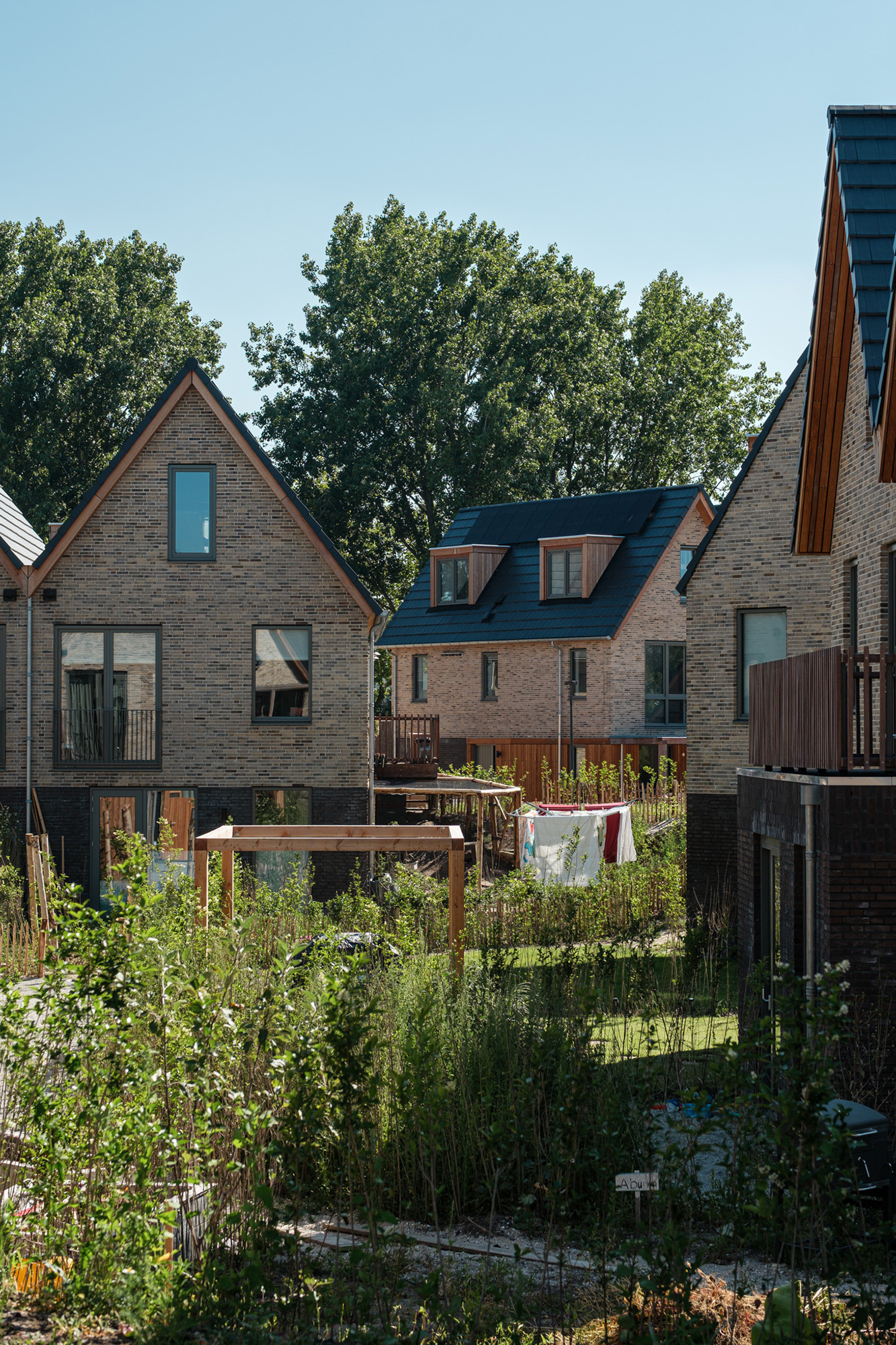
On a smaller scale, the transition from the herb-rich grassland to the homes is particularly interesting. In many residential neighborhoods, public green space ends at the property boundary. This is where a fence begins, creating a barrier for many ground-dwelling animals. In Happy Days, this boundary is much softer. The homes stand separately within the landscape, the private back gardens are set further back, and at the front, the shared landscape extends deep between the houses.
Where property boundaries are needed, they largely consist of hedges rather than solid fences. This creates not only passages beneath the vegetation, but also an entire network of shelter. Species such as hedgehogs and dunnocks benefit from this, finding food as well as nesting and hiding places within the network. In this way, a property boundary becomes not a barrier, but part of the habitat.
Here, ecological permeability therefore means more than simply providing a physical gap for an animal to pass through. It also means providing sufficient shelter, food, and recognizable landscape structures along the way.
Happy Days as a stepping stone in Zoetermeer
Ecological permeability naturally does not stop at the boundary of the development. The surrounding area also determines whether species can establish themselves over the long term.
The kingfisher is a good example. It has now been spotted twice at the pond, where it hunts for fish. Happy Days does not offer an obvious nesting location for this species, but that does not mean the neighborhood cannot form part of its habitat. The pond therefore functions as a stepping stone within a much larger network of waterways and green spaces in Zoetermeer.
We also see Happy Days functioning as a stepping stone for the natterjack toad. Before the adjacent neighborhood was built, the species occurred there. During construction, a temporary habitat suitable for the species emerged, but as the neighborhood developed further, this habitat gradually disappeared, and the natterjack toad was no longer found there around 2023. Happy Days was being developed around the same time. It is plausible that the species subsequently moved to this new, suitable habitat in Happy Days.
Every scale matters
What we are learning from the first observations is that ecological permeability needs to be designed at multiple scales simultaneously.
At the scale of just a few centimeters, the absence of hard bank reinforcement or an opening beneath a hedge can determine whether an animal is able to move on. At the neighborhood scale, it makes a difference whether green spaces consist of separate islands or form one connected landscape. And at the city scale, connections to surrounding green and water structures determine whether a neighborhood becomes part of a larger ecological network.
At the same time, we need to be cautious about drawing conclusions. The fact that a species is observed in Happy Days does not automatically mean that one specific design choice is responsible. But as more observations accumulate, we can increasingly compare the data with the spatial characteristics of the plan. Step by step, we are trying to determine which design principles genuinely contribute to creating a nature-inclusive neighborhood.
In the next phase of the research, we will therefore take a closer look at the hard numbers that can be derived from the design itself. How many square meters of green space are actually connected? How many trees are there, exactly? And how does the neighborhood score against the much-discussed 3-30-300 guideline?
In the meantime, would you like to see for yourself what is being observed in Happy Days? All observations can be followed through the Happy Days BioBlitz on Waarneming.nl:
https://waarneming.nl/bioblitz/18924/bioblitz-happy-days-zoetermeer
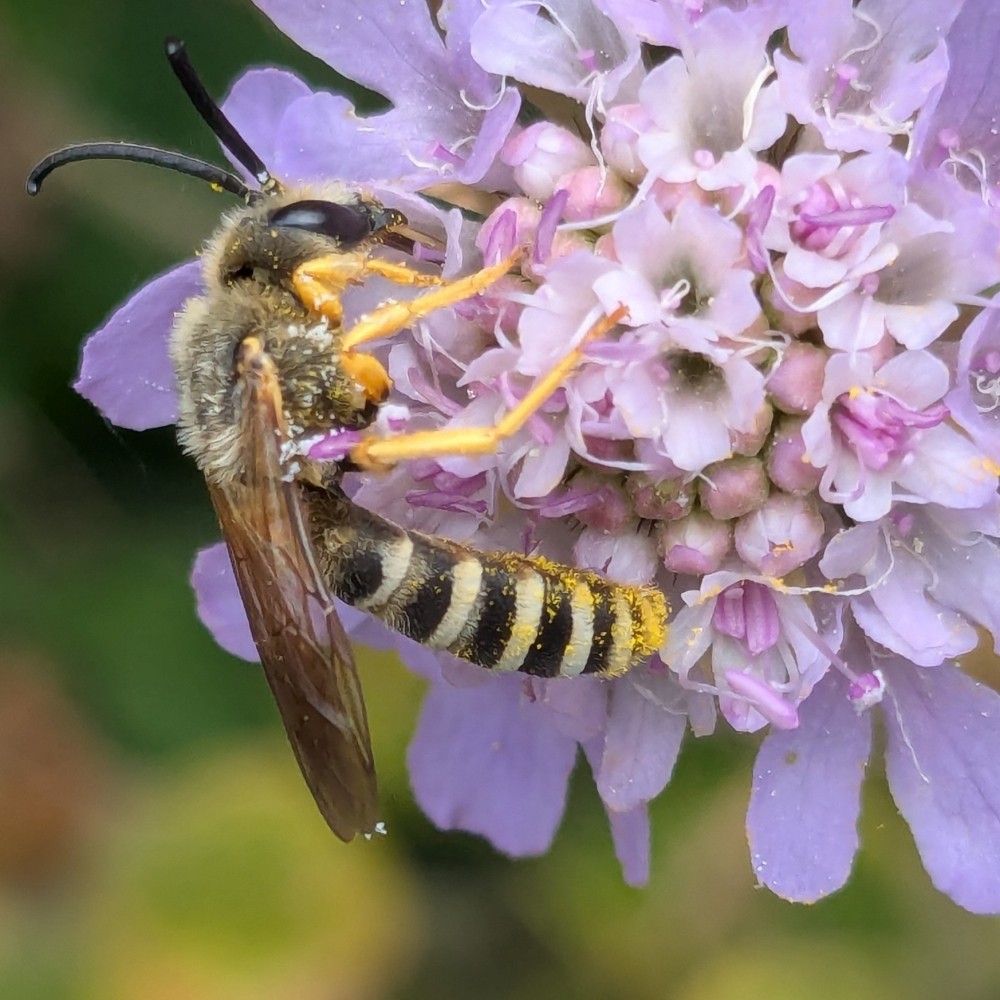
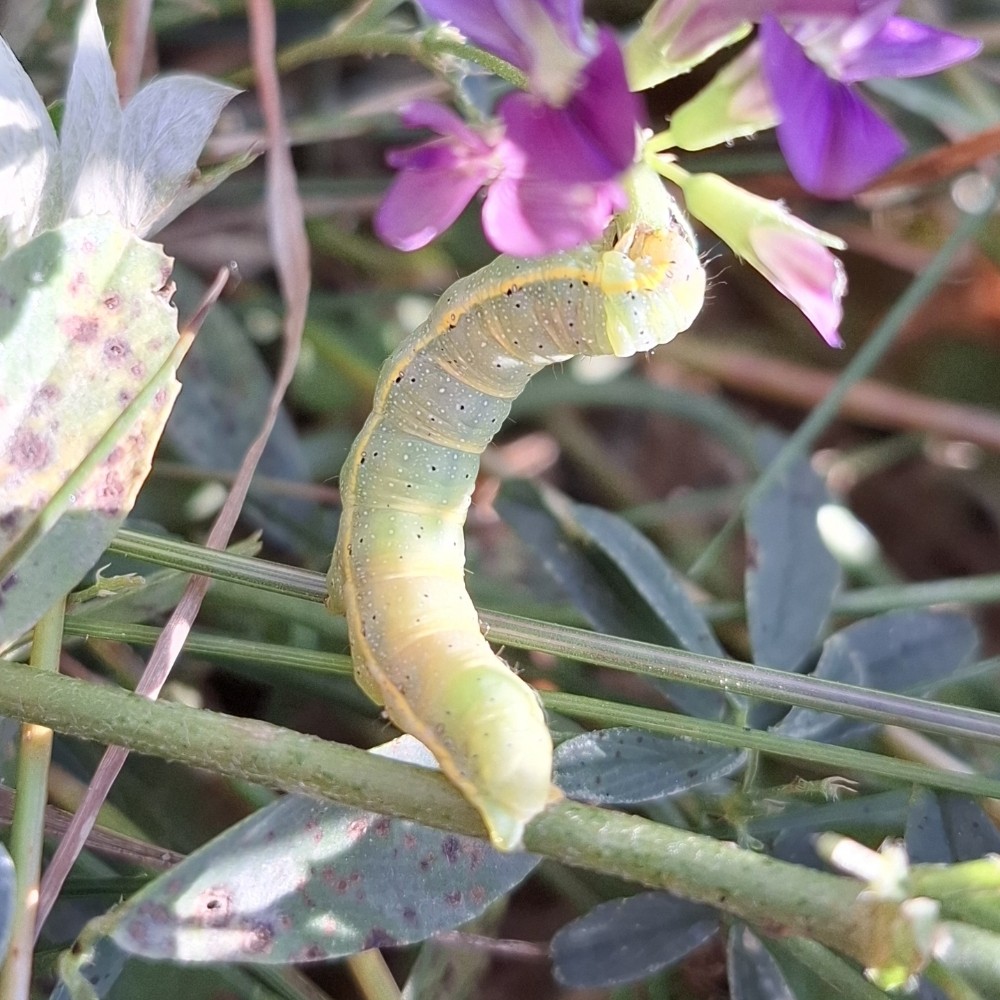
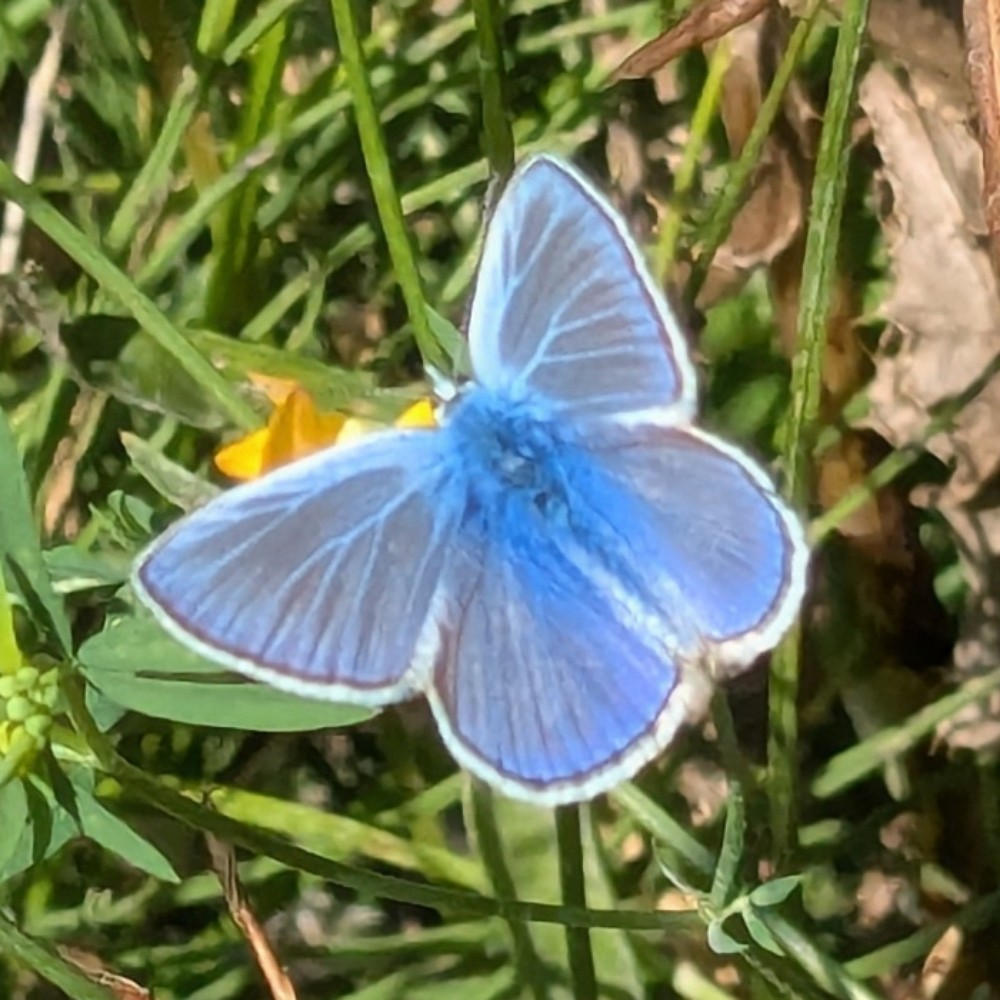
A selection of the more than 300 species observed, including the natterjack toad. Photos submitted through the BioBlitz by residents and people living in the surrounding area.