Vrijstaat Cajanus

Haarlem, NL

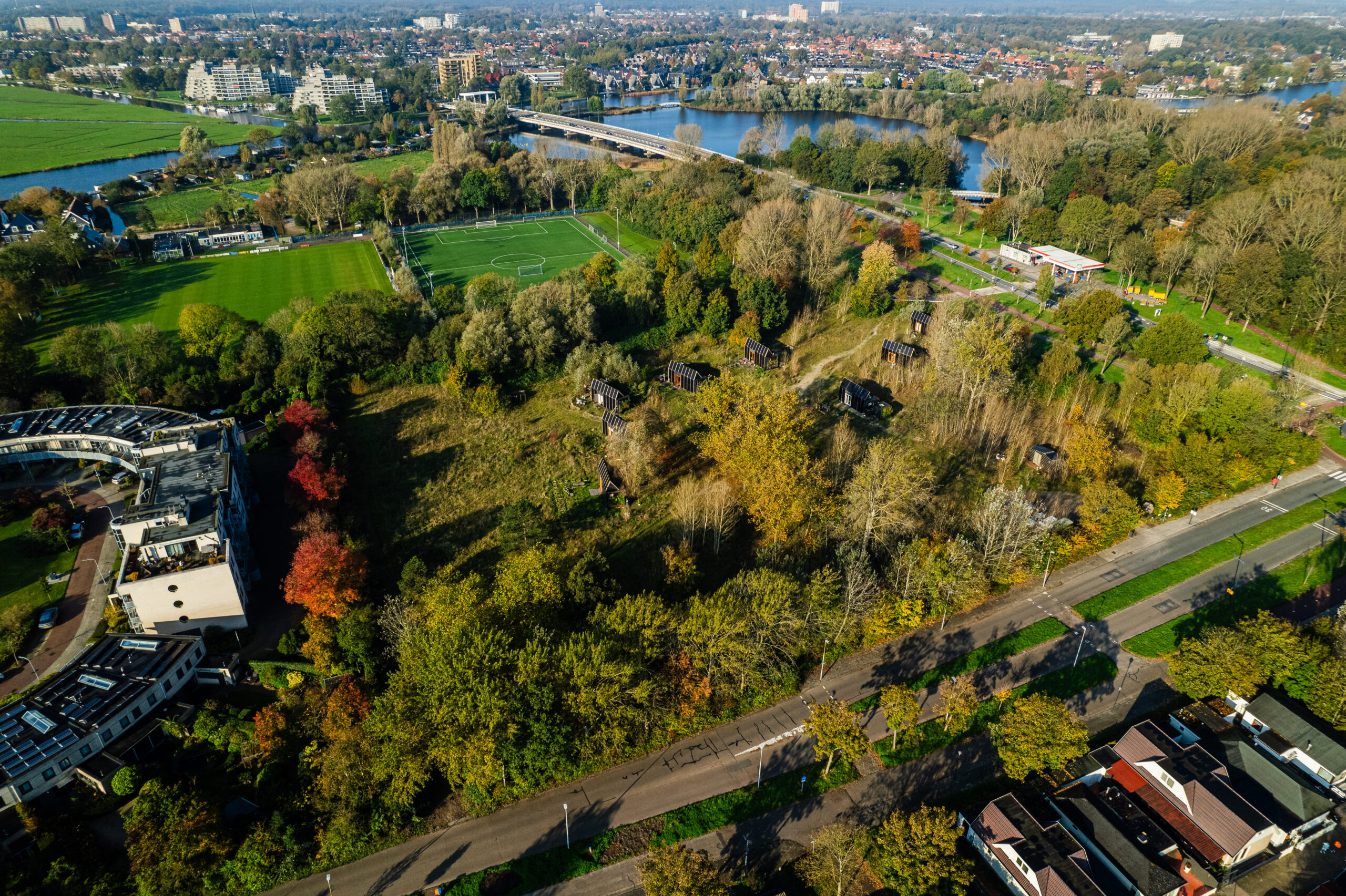
The municipality of Haarlem is calling for a residential development that adds both spatial and social value to its surroundings. Central to this is the realization of a nature-inclusive and socially connected living environment that strengthens the ecological link between the Groene Zoom and the city, while also providing space for new forms of collective living.

The site plays a key role as a habitat and connection zone for various species groups, as well as a link between urban functions and the surrounding landscape. The assignment calls for a careful balance between densification and greening, between individual housing quality and collective use, and between privacy and openness.

Client: Bemog, BPD en Barli
Year: 2024 – 2026
Partner: Mix Architectuur, Ecogroen, Barli, Steenvlinder, Mobycon, KMVC
Status: Design
Type: Urban development plan and layout plan
Location: Zwemmerslaan Haarlem
Program: 132 homes, underground parking garage, and shared communal spaces
Architecture: MIX Architectuur

Design and elaboration

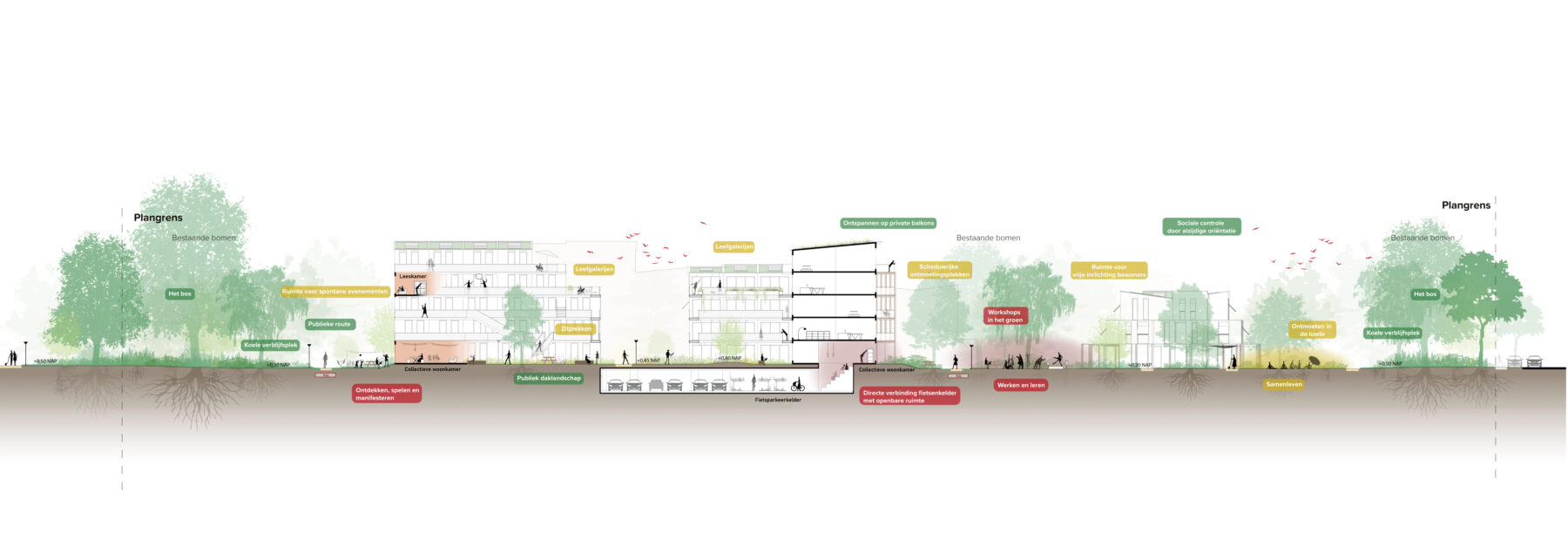
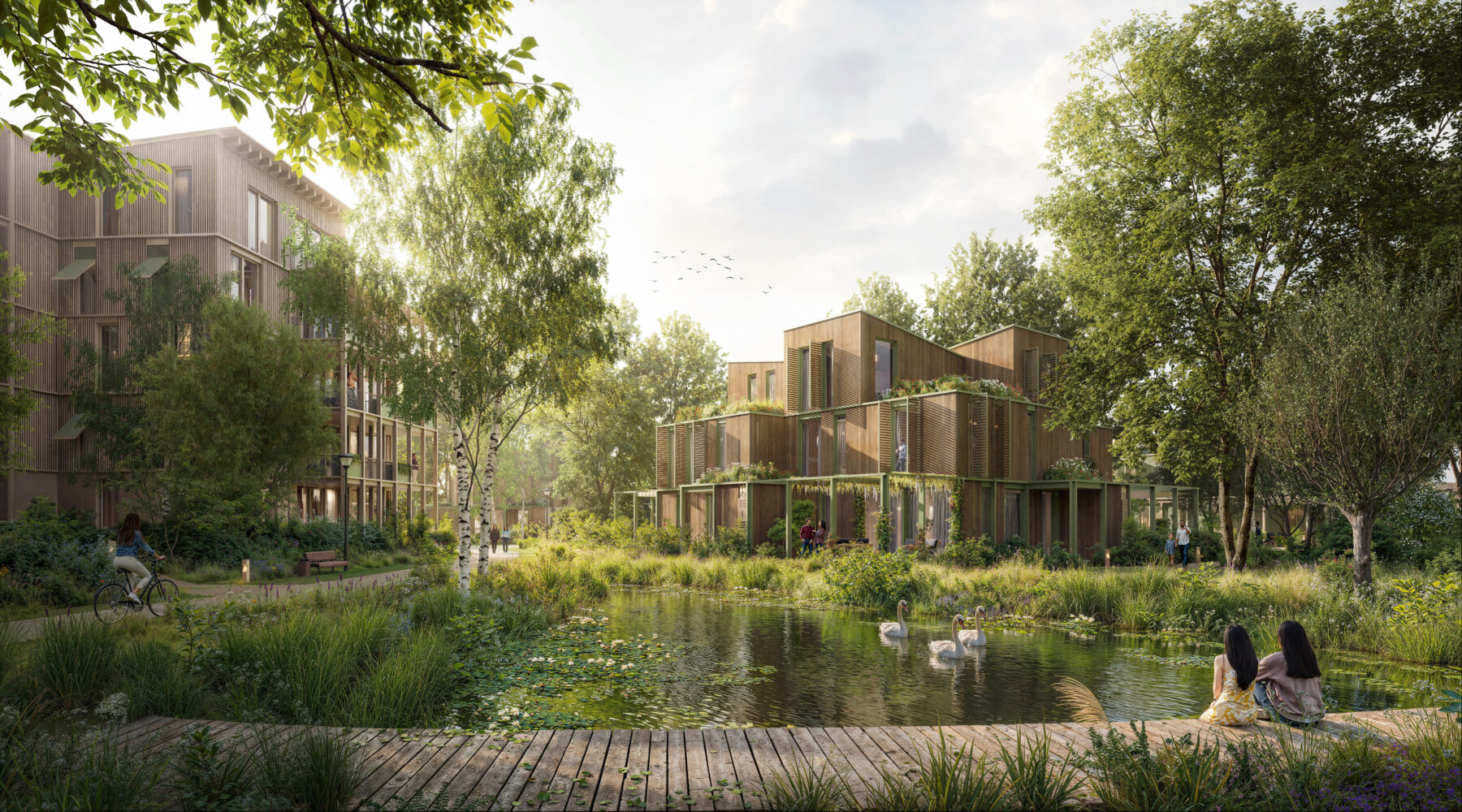
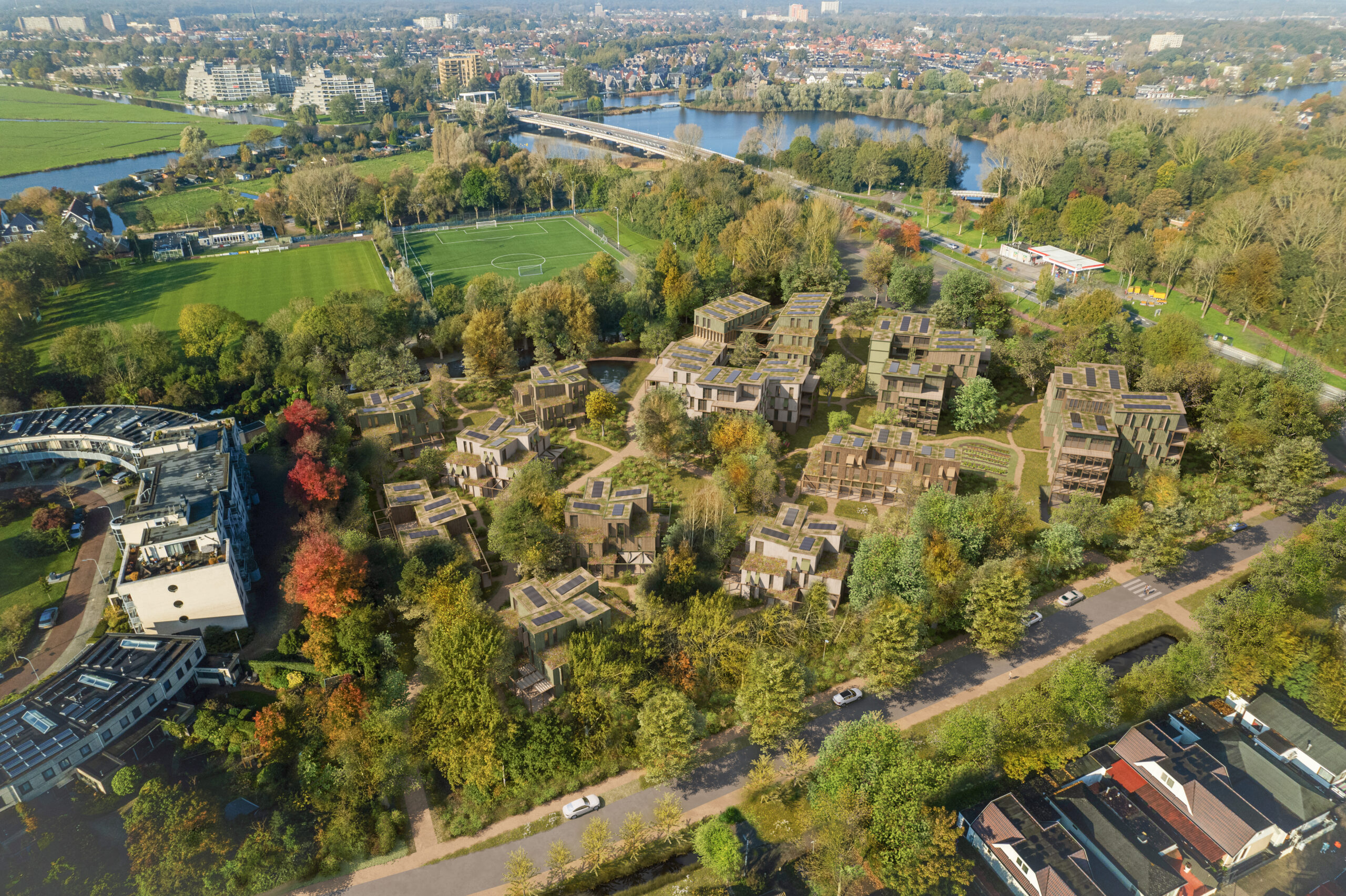

The urban design plan is conceived as a continuous landscape in which buildings and nature are interwoven. Detached, freestanding building volumes are dispersed within the greenery, following the logic of the existing ground conditions and tree structure. This creates small-scale residential clusters, each with its own identity and a strong relationship to the landscape.

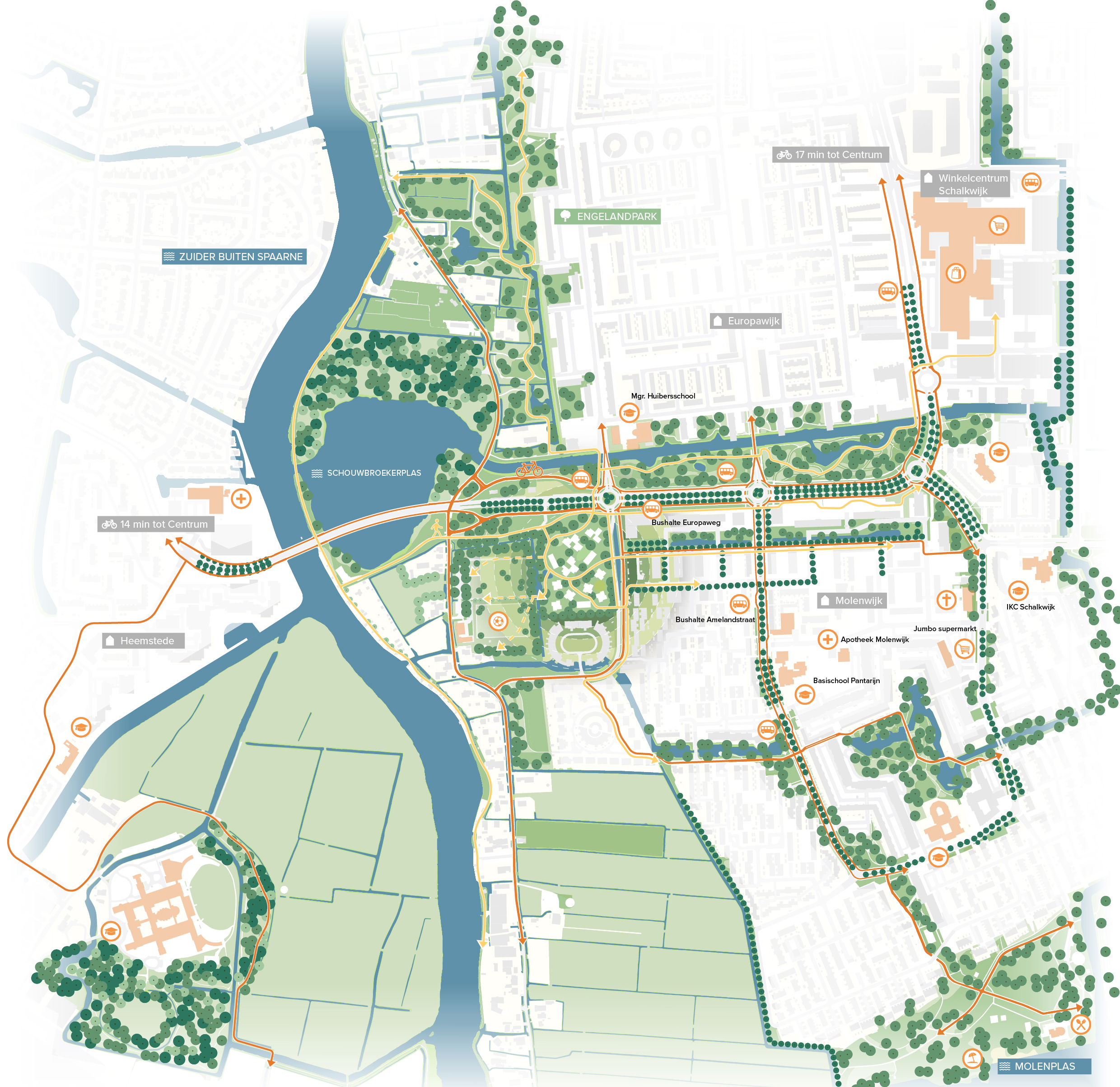
A fine-grained network of public routes forms the spatial framework of the plan, connecting the Vrijstaat to surrounding neighborhoods and amenities. The free positioning of the buildings creates views and sightlines, ensuring that the landscape remains perceptible throughout.

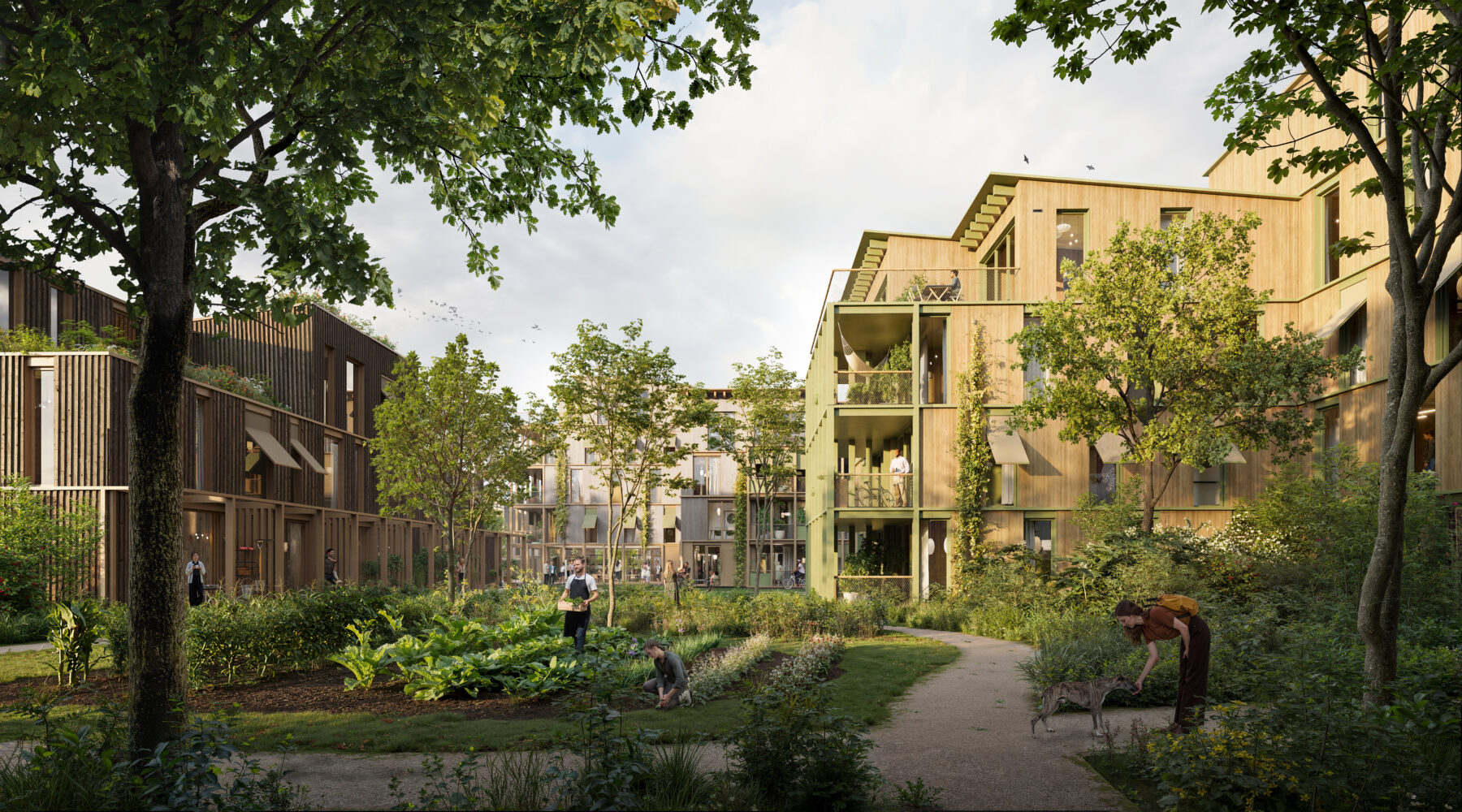
The buildings vary in height and typology and consist of lightweight, modular timber construction. Their all-sided orientation and integrated outdoor spaces establish a direct relationship between living and landscape, while preserving maximum space for greenery.
Use and social functioning

De Vrijstaat is designed as an open and inviting living environment where encounter, ownership, and a sense of community are central. The area is fully permeable and offers a rich palette of public, collective, and private spaces.

Along the main structure lie four distinctive public places — the forest, the field, the pond, and the farmland — each with its own atmosphere and use. These spaces accommodate work, play, social interaction, and food production, and together form the social heart of the plan.

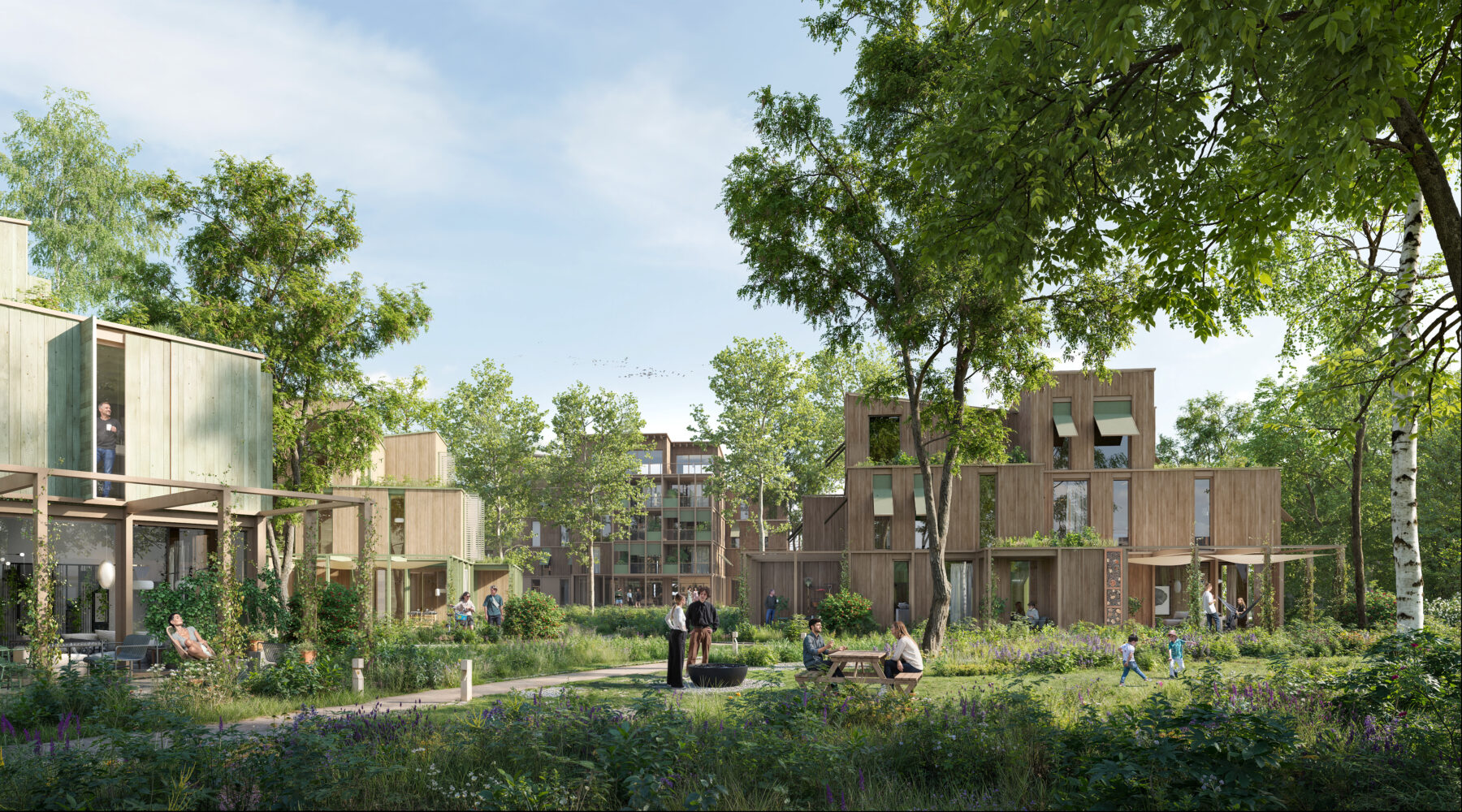
Between the residential clusters are informal, collective in-between spaces that residents can shape and use themselves. This creates a living environment that allows room for initiative and engagement, where residents actively contribute to their surroundings.
Landscape

We reinforce the existing landscape characteristics on the different sides of the project area. We introduce a water-rich environment and create a suitable habitat for all five species groups. For the buildings, we use the grid of the existing foundation piles.

Buildings

We realize the parking facilities entirely underground and design playful outdoor spaces. This allows room for 132 dwellings in various typologies. The buildings remain within a GSI of 0.30 and an FSI of 1.00.

Height

The building height varies from north to south, transitioning from 4–5 to 2–3 storeys. The buildings are stepped, all-sided, and sculptural in design. This makes the gradient visible at the building level and reinforces the human scale.

Outdoor space

The buildings feature architecturally integrated outdoor spaces: natural ground is maximized here, covering 39% of the building footprint, excluding the landscape on top of the underground parking garage (9%). The total experiential green space thus covers 48% of the building footprint.

Routing

De Vrijstaat is permeable and fine-grained, with public paths throughout. Primary routes of 2.5 m wide connect key public spaces. Secondary routes (2.1 m wide) connect to future routes via the sports fields, and the tertiary route network creates informal connections between the neighbourhood clusters.

Open vistas

By angling and freely positioning the buildings, we create open vistas towards the landscape. The fine-grained path network reinforces these sightlines. The strong experience of the landscape—between the buildings at 46% on the east side, 44% on the west side, and 30% on the north side—intensifies the sheltered, landscape-based character of the residential habitat De Vrijstaat.

Landscape, sustainability and climate adaptation

The landscape forms the foundation of the plan and serves as a framework for ecology, use, and climate adaptation. Existing trees and structures are preserved and strengthened as much as possible, complemented by new native planting that contributes to biodiversity and a resilient ecosystem.

The Vrijstaat provides habitat for various species groups, supported by a layered vegetation structure, nature-inclusive buildings, and integrated animal habitats. Water plays a central role in the design, with a system of swales and ponds that ensures water retention, infiltration, and a water-rich habitat. The combination of greenery, water, and shaded areas creates a pleasant microclimate and contributes to a healthy, future-proof living environment.

Socially connected

A network of public and collective routes strengthens social connections within the Vrijstaat and links four characteristic places — forest, field, pond, and farmland — each offering space for meeting, activities, and staying. Between the residential clusters lie informal, shared intermediate spaces that stimulate community building and create a gradual transition between private and public.

Nature-inclusive

The plan enhances biodiversity by building on existing landscape structures and developing a variety of habitats. Nature-inclusive architecture actively contributes to the ecosystem through integrated provisions for flora and fauna. Existing trees are preserved and reused wherever possible, while a network of ponds and wadi systems creates a water-rich, ecological…

Process and collaboration

The development of Vrijstaat Zwemmerslaan has been set up as an integrated and collaborative process, in which design, development, and use are closely interconnected. Together with the municipality, future residents, and involved stakeholders, work is underway to create a living environment that allows for collective initiative and self-organization.

The plan provides a flexible framework for various housing typologies, including housing cooperatives and CPO (collective private commissioning). Within clear spatial and programmatic conditions, residents are given the opportunity to actively shape their living environment.

This approach results in a resilient and adaptive residential environment where ecology, community, and urban living come together, and where residents actively engage with their surroundings.
Would you like to know more about this project?

Rpbbert Jan will be happy to tell you about it!