Pier Panderplein
- Post-war garden city
- Public space design

Design and development
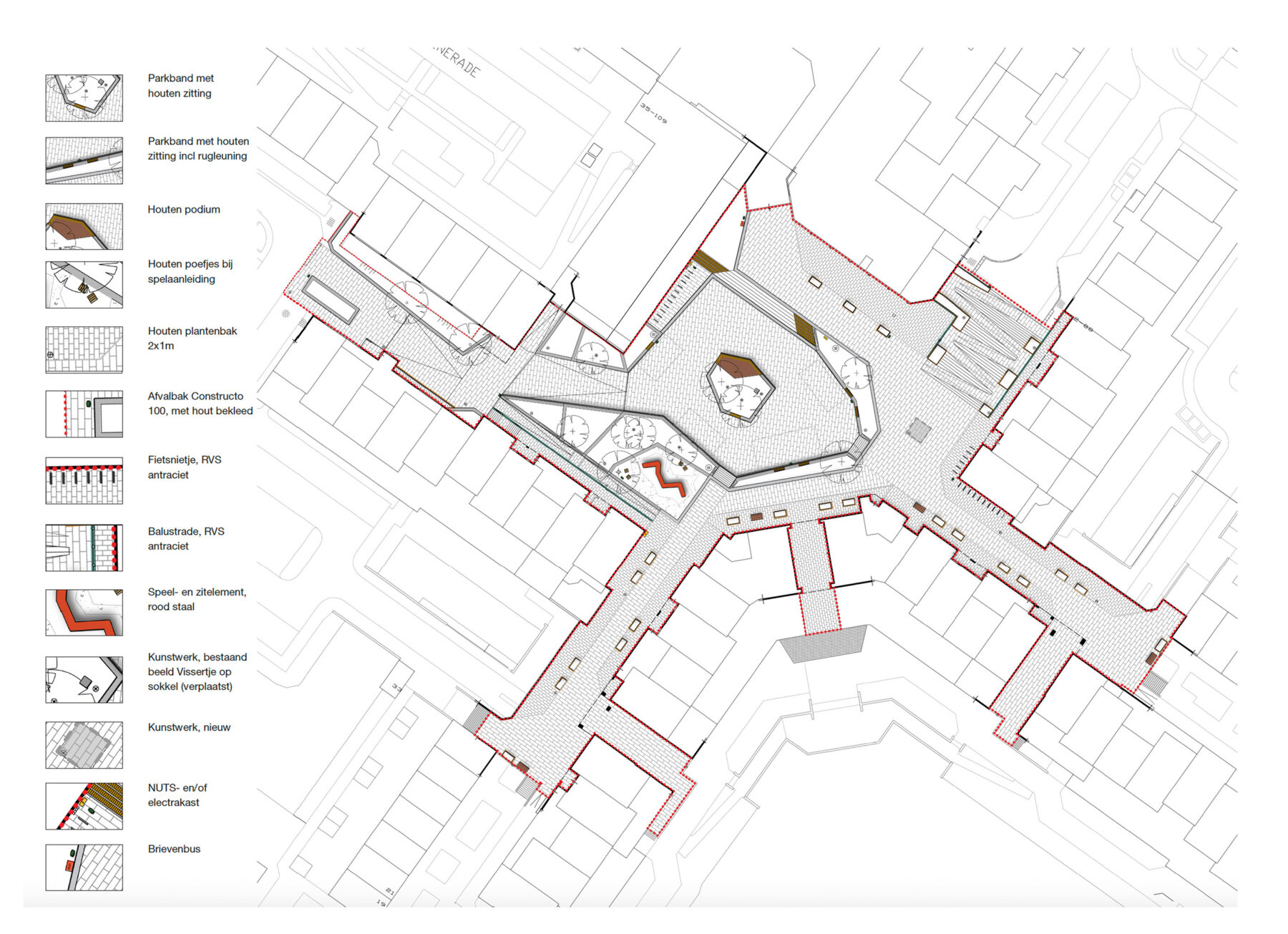
The design for Pier Pander Square is based on a clear spatial structure in which circulation, recreation, and greenery are carefully integrated. The existing urban axes of Schollevaar form the foundation for the new layout. The north–south connection between the station, shopping centre, and Schollebos is strengthened and linked to the existing “red carpet” route on the northern side of De Scholver. At the same time, the east–west routes through the neighbourhood are made more legible and accessible.
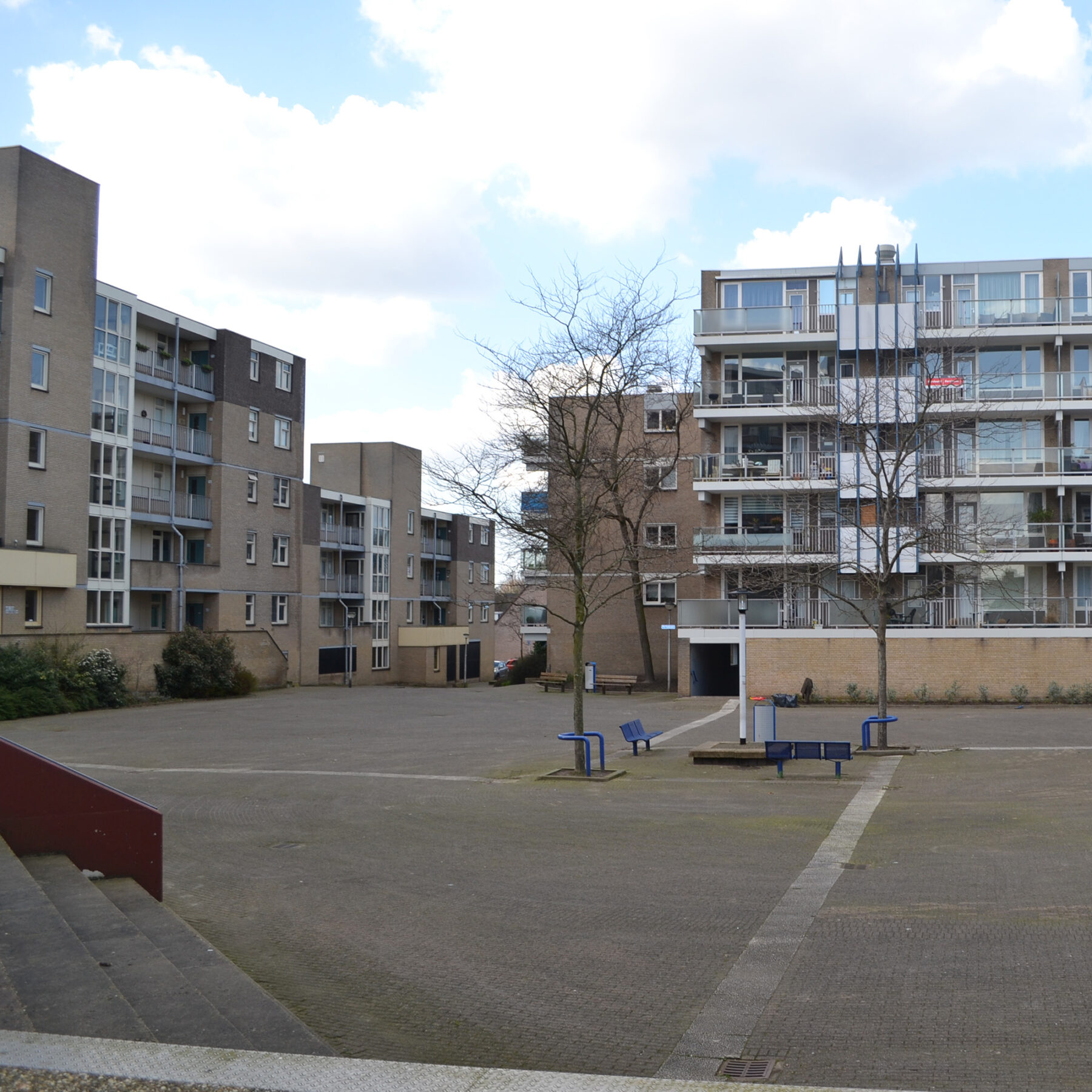
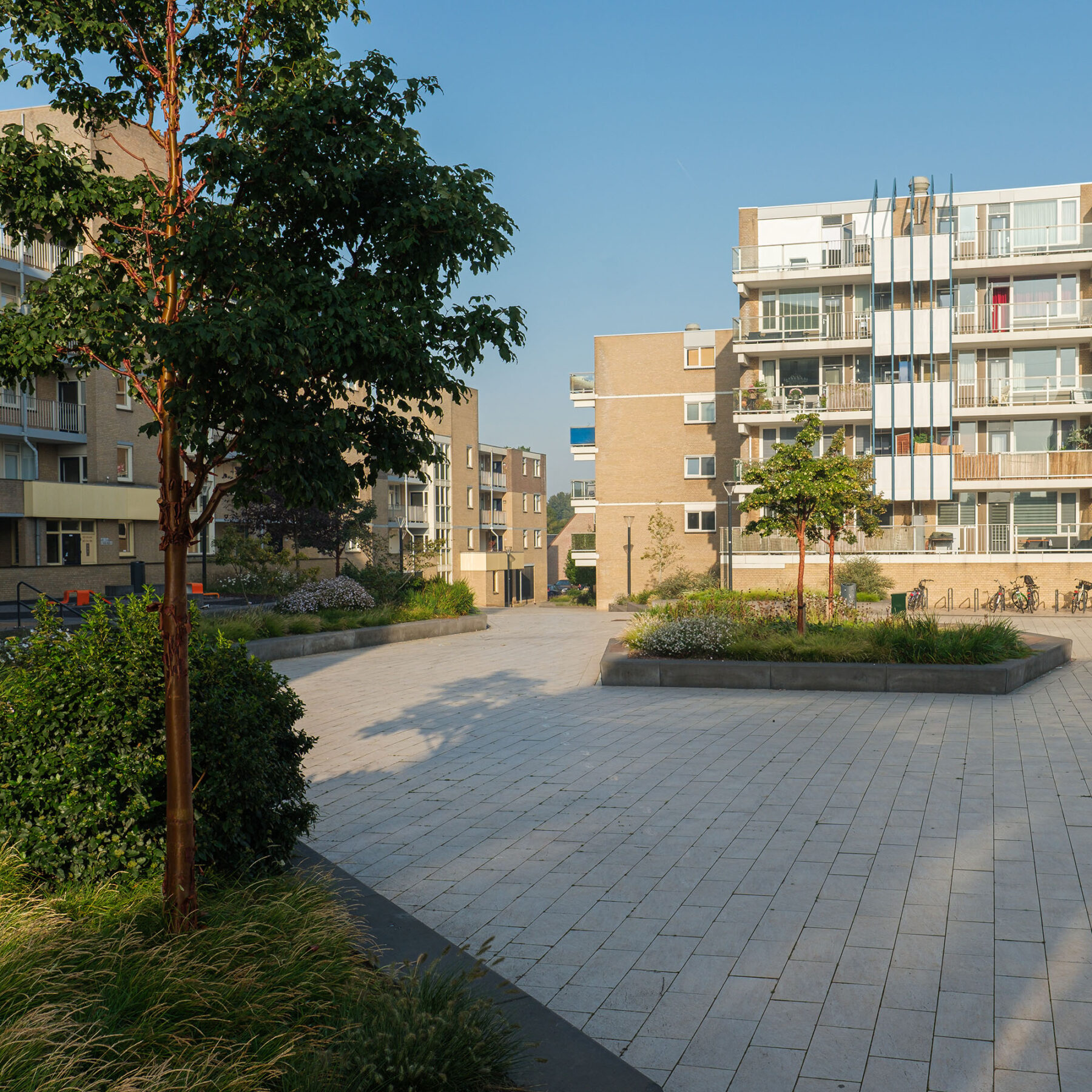
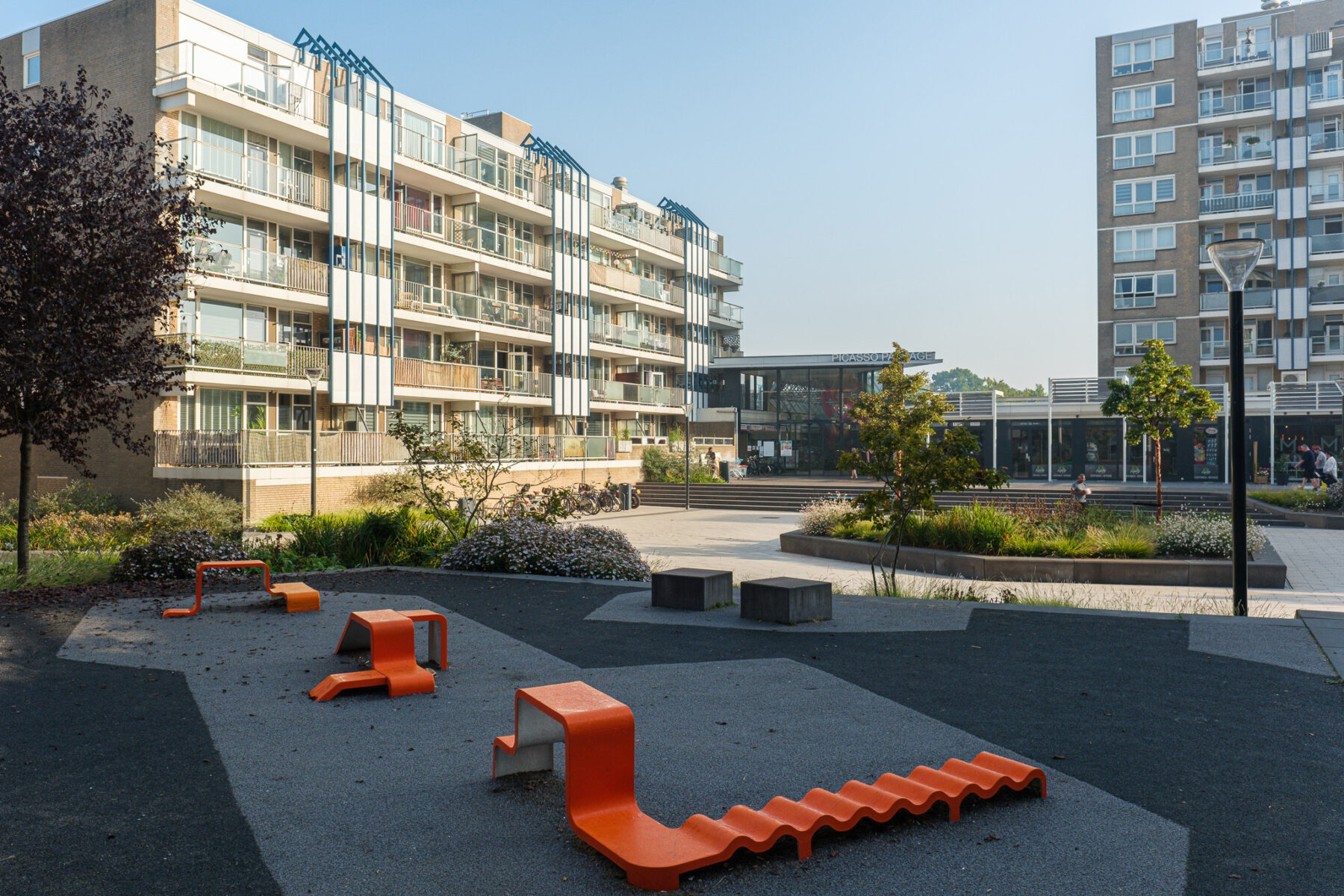
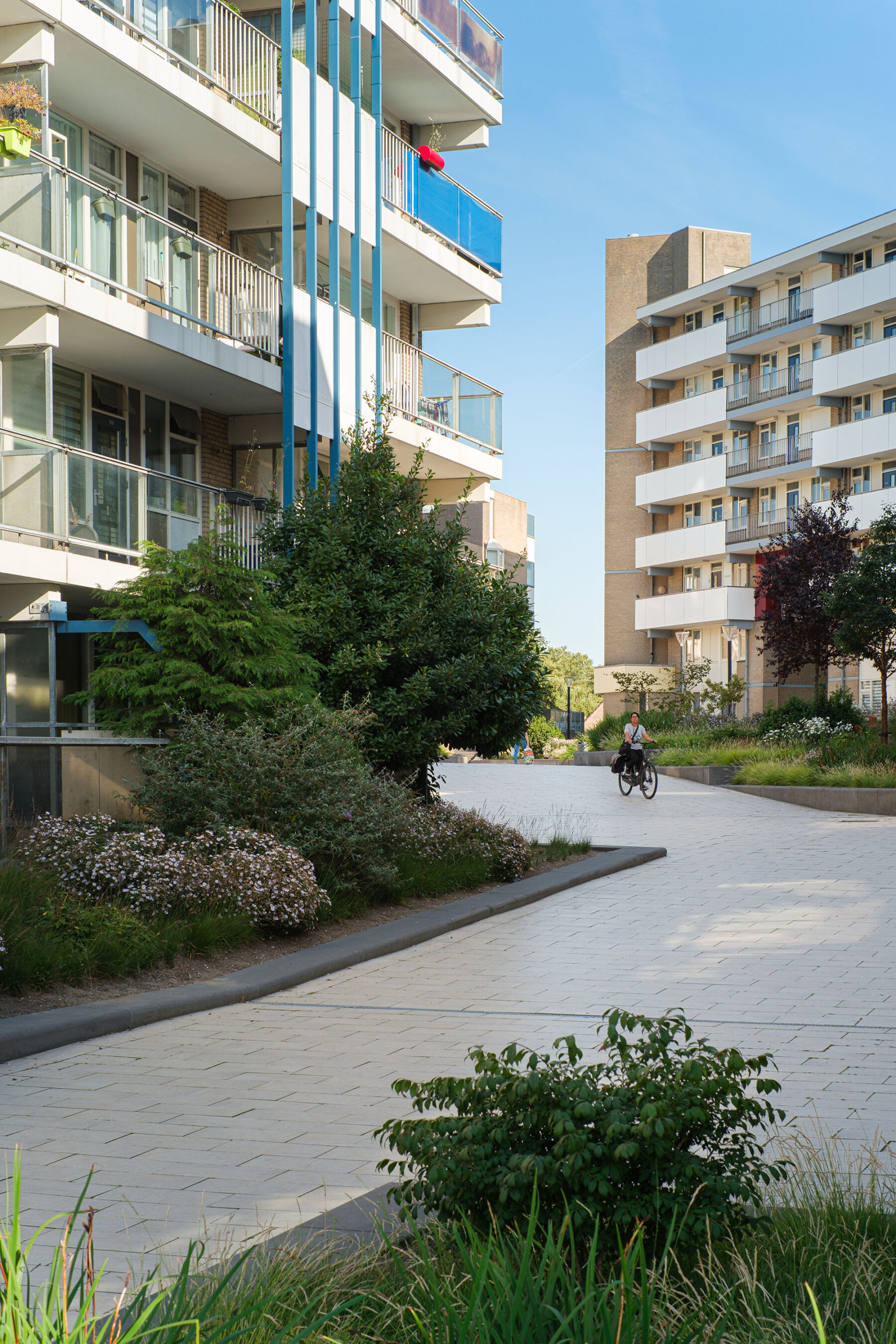
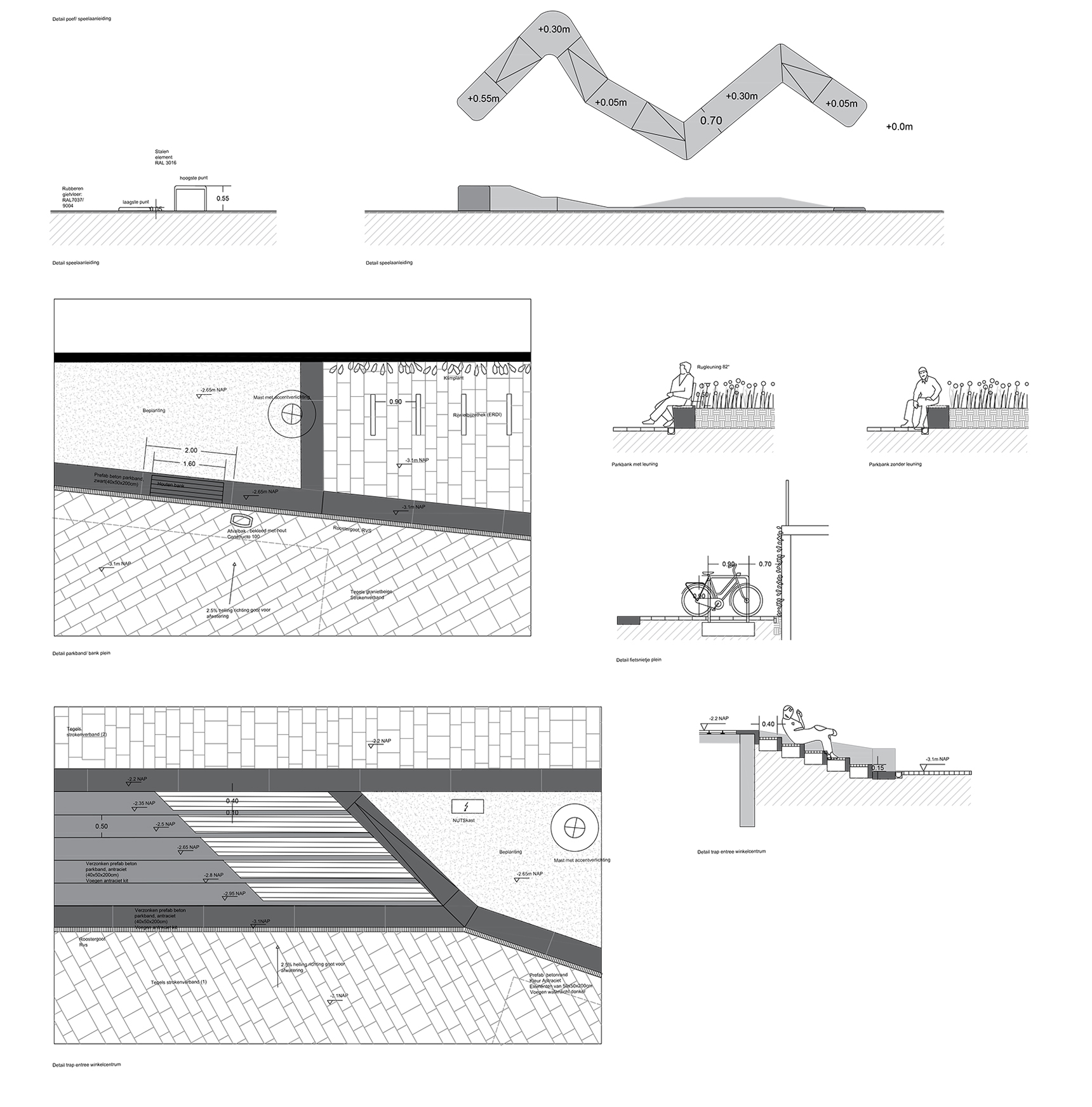
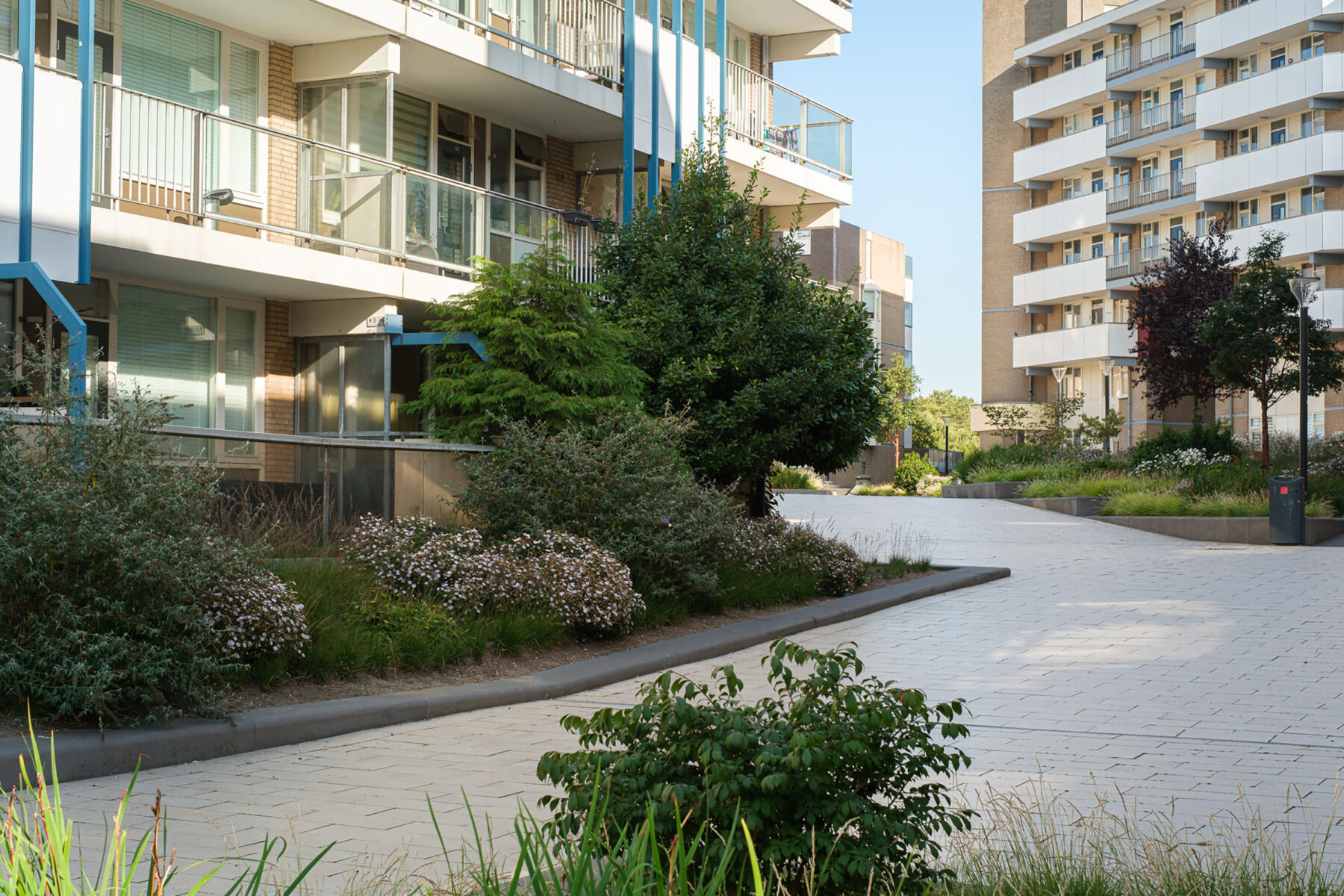
The new square will have a soft and welcoming character through the use of warm paving materials, green terraces, and an angular design language that complements the existing architecture of the surrounding area. Large staircases and integrated seating edges replace the fragmented level differences of the current situation. New ramps provide logical accessibility for pedestrians, cyclists, and people with reduced mobility. This creates a clear and safe public space in which slow traffic takes centre stage.
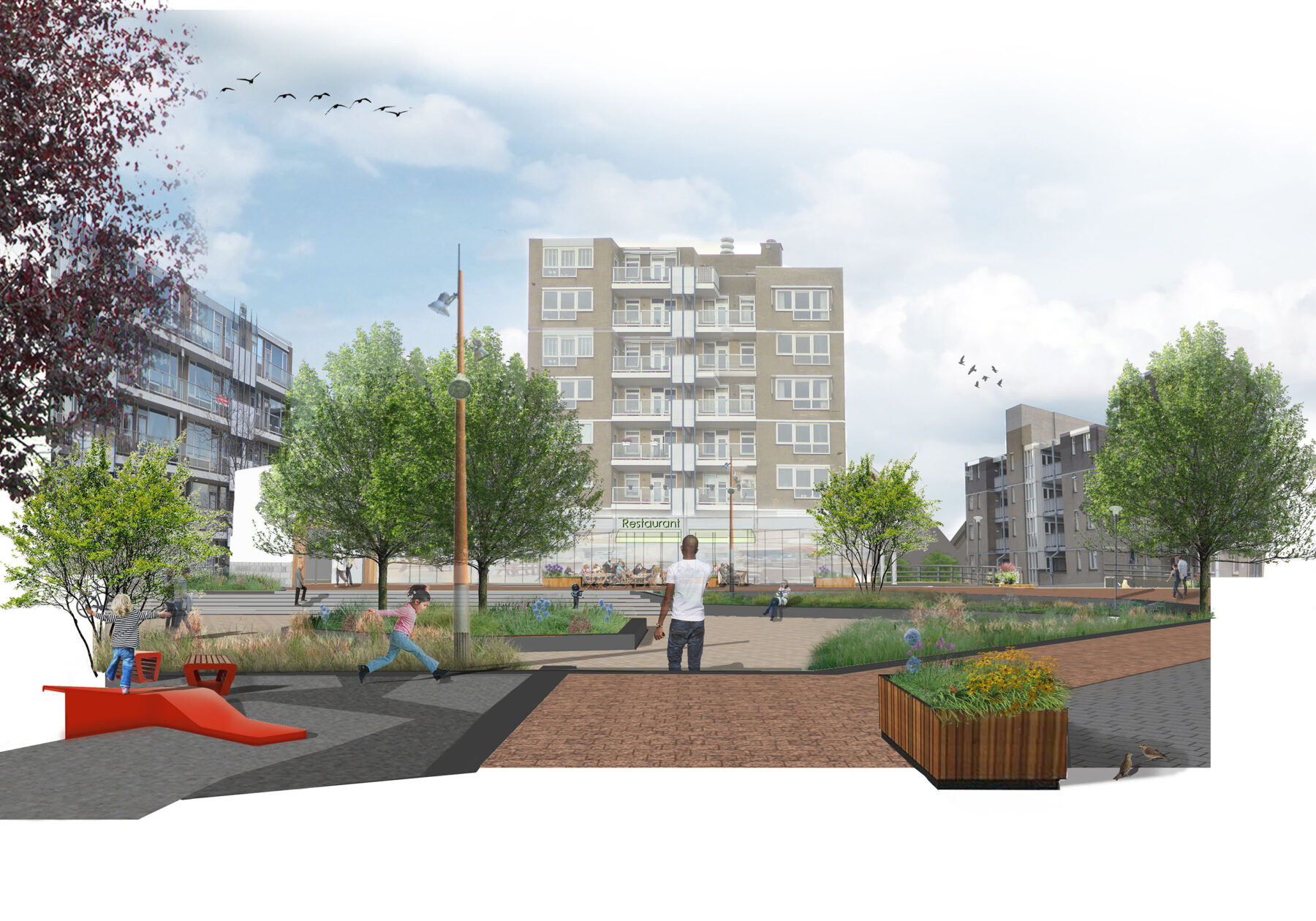
The square accommodates a variety of uses. A central gathering area with integrated seating and play elements forms the heart of the design. Around the shopping centre, space is created for outdoor terraces and small-scale events, while the existing market is retained. Through the combination of recreation, movement, and programming, the square will develop into a vibrant meeting place for residents and visitors alike.
Use and social function
The redesigned Pier Panderplein strengthens the role of De Scholver shopping centre as the social and everyday heart of Schollevaar. In addition to providing space for shopping and pedestrian circulation, it creates a public space where residents can meet, spend time, and organise activities. The design encourages informal use by a wide range of user groups, from children and young people to older residents and visitors to the shopping centre.
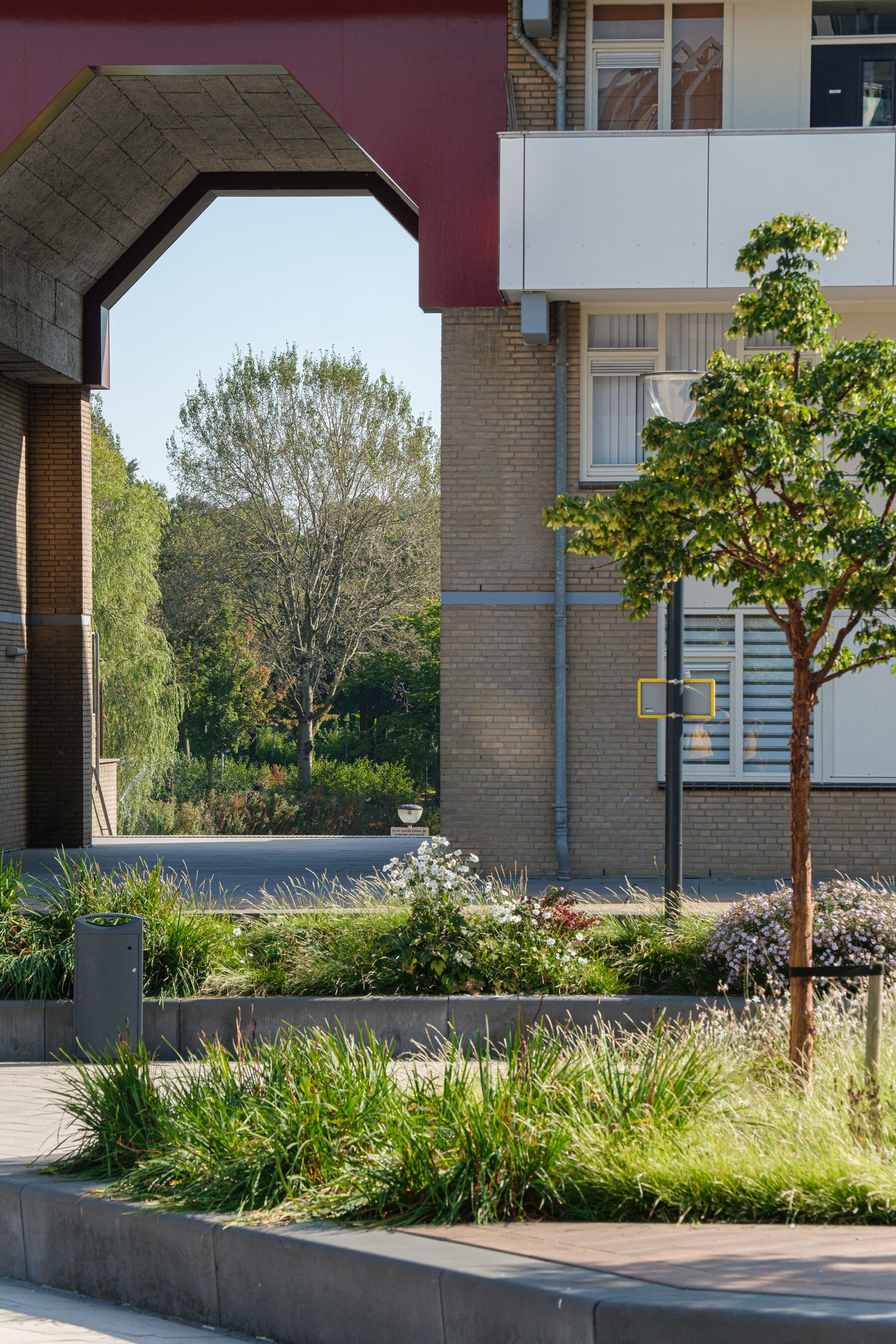
The introduction of seating areas, terraces, play features, and flexible gathering spaces creates a square that remains active throughout the day. The design also contributes to social safety and wayfinding within the neighbourhood. Dark passageways and confusing routes are replaced by open sightlines, comfortable pedestrian connections, and a consistent material palette. A carefully designed lighting scheme ensures that the square remains attractive and safe during the evening hours as well.
Art and identity also play an important role in the design. The existing Pier Pander sculpture is given a prominent position within the square and, together with new play elements and bespoke street furniture, becomes a recognisable feature of the public realm. In this way, the design reinforces the cultural and social identity of the neighbourhood.
Landscape, sustainability and climate Adaptation
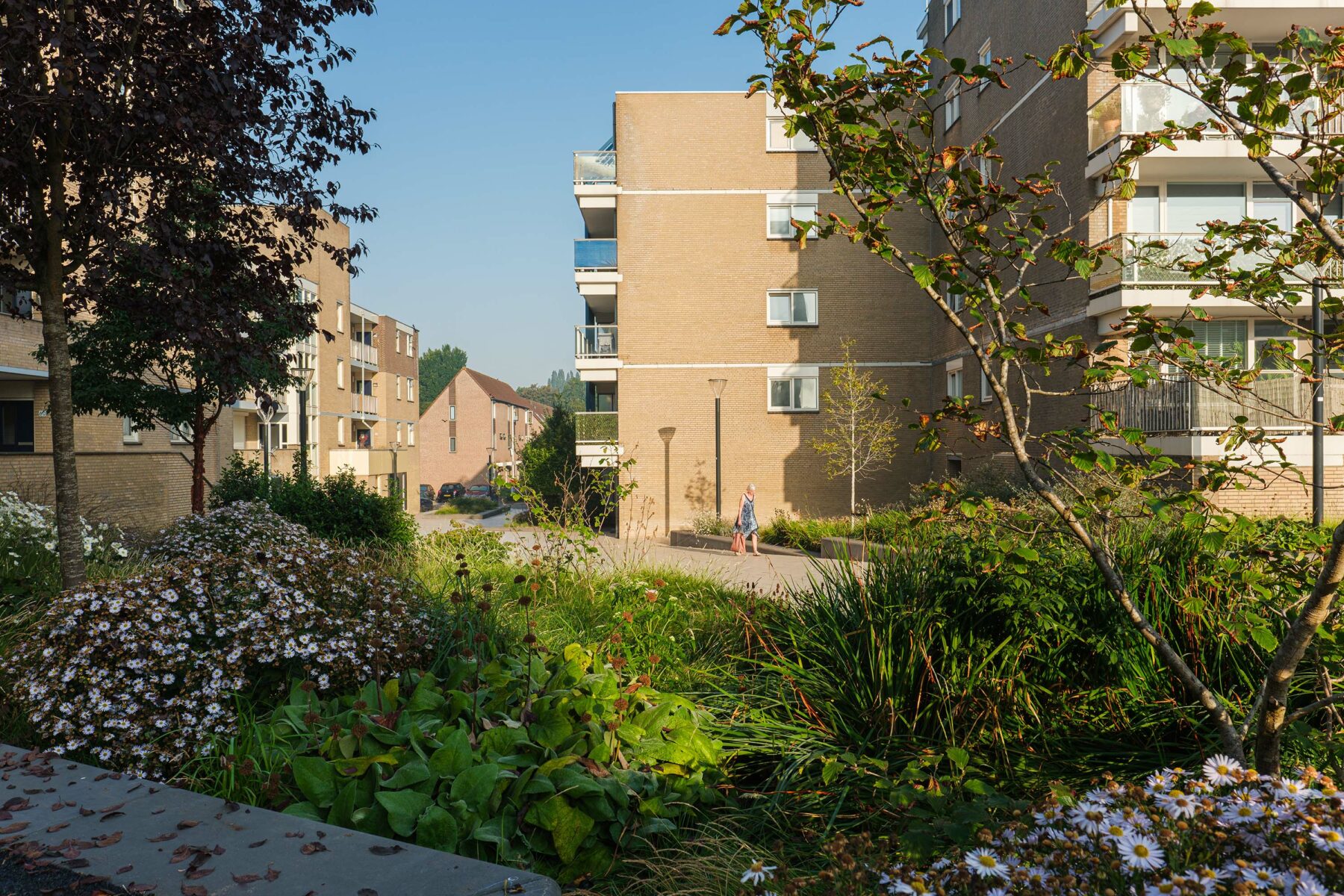
Greenery is a key component of the new identity of Pier Panderplein. The addition of green terraces, trees, and lush planting softens the hard, paved character of the existing situation and enhances the overall quality of the public space. A carefully selected palette of ornamental grasses, flowering perennials, and multi-stemmed trees creates a strong seasonal character, providing colour, shelter, and biodiversity throughout the year.
The landscape design also contributes to improving the microclimate and reducing noise disturbance. Planting and level changes create a softer acoustic environment and help limit sound reflection across the square. Rainwater is managed locally wherever possible through integrated drainage channels and infiltration measures incorporated into the public realm. The use of durable materials, robust detailing, and low-maintenance planting results in a resilient, future-proof, and manageable public space.
Process and collaboration
The design for Pier Panderplein was developed through close collaboration with local residents, business owners, the Municipality of Capelle aan den IJssel, and other stakeholders. During a series of co-creation sessions, residents actively contributed ideas regarding the layout, use, and identity of the square. Their aspirations concerning greenery, safety, quality of stay, and community activities formed an important foundation for the final design.
By combining design-led research with participatory processes, an integrated plan emerged in which urban design, landscape, mobility, and public life come together. As a result, Pier Panderplein is transforming from a paved thoroughfare into a distinctive and inclusive meeting place for the Schollevaar neighbourhood.
Want to know more about this project?
Robbert Jan will tell you all about it!