Happy Days

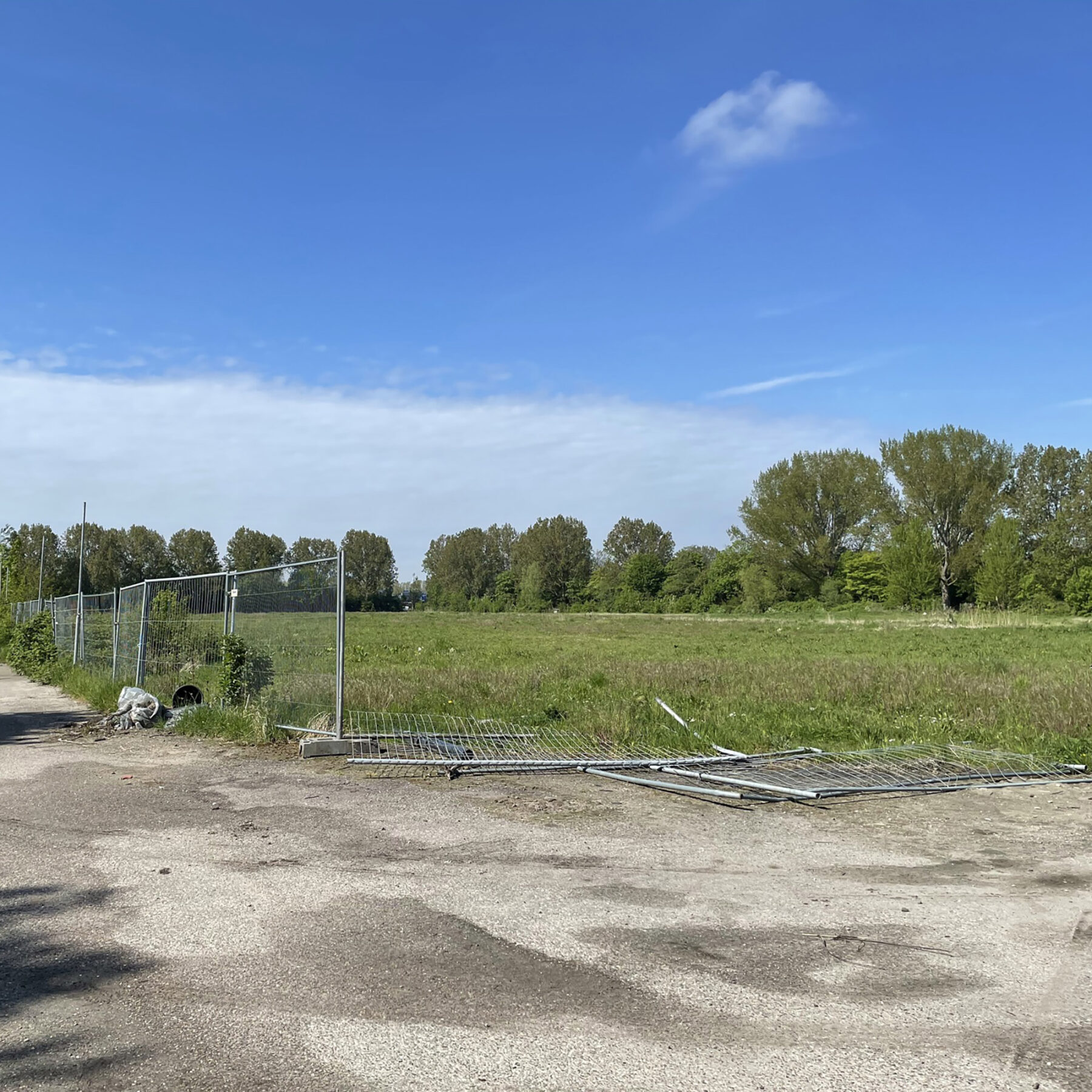
The Dwarstocht site was a vacant plot with an industrial designation, located on the corner of the Vinex neighbourhood Oosterheem. Given its position along a main artery in Zoetermeer and the local housing demand, residential development is a logical use for this location. A distinctive feature of the site is the earthen embankment that encloses it on three sides. This embankment is planted with dense woodland and many mature trees, giving the area the feel of a green oasis, separated from the surrounding neighbourhoods and busy roads. This also formed the direct inspiration for the concept.
Design and development
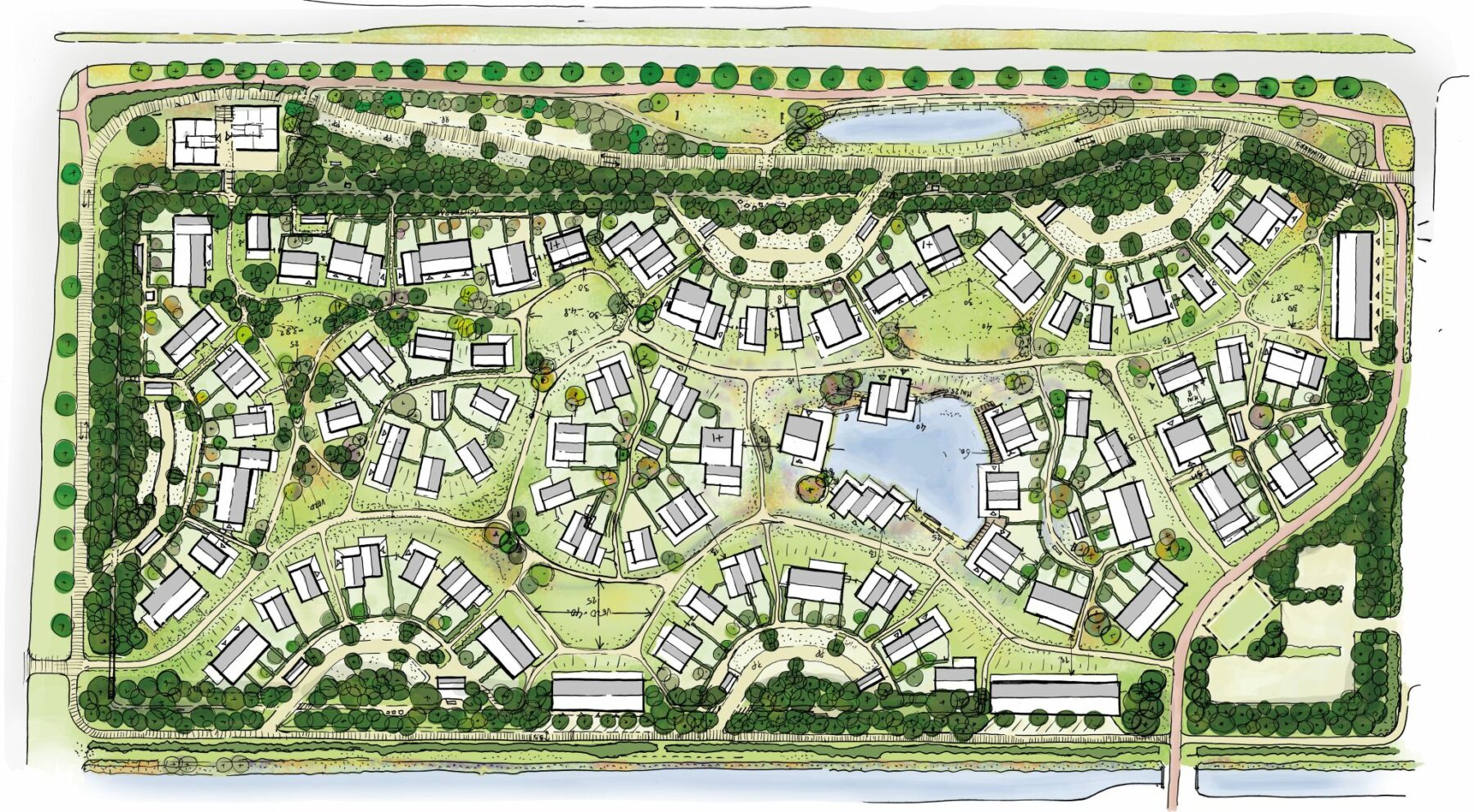
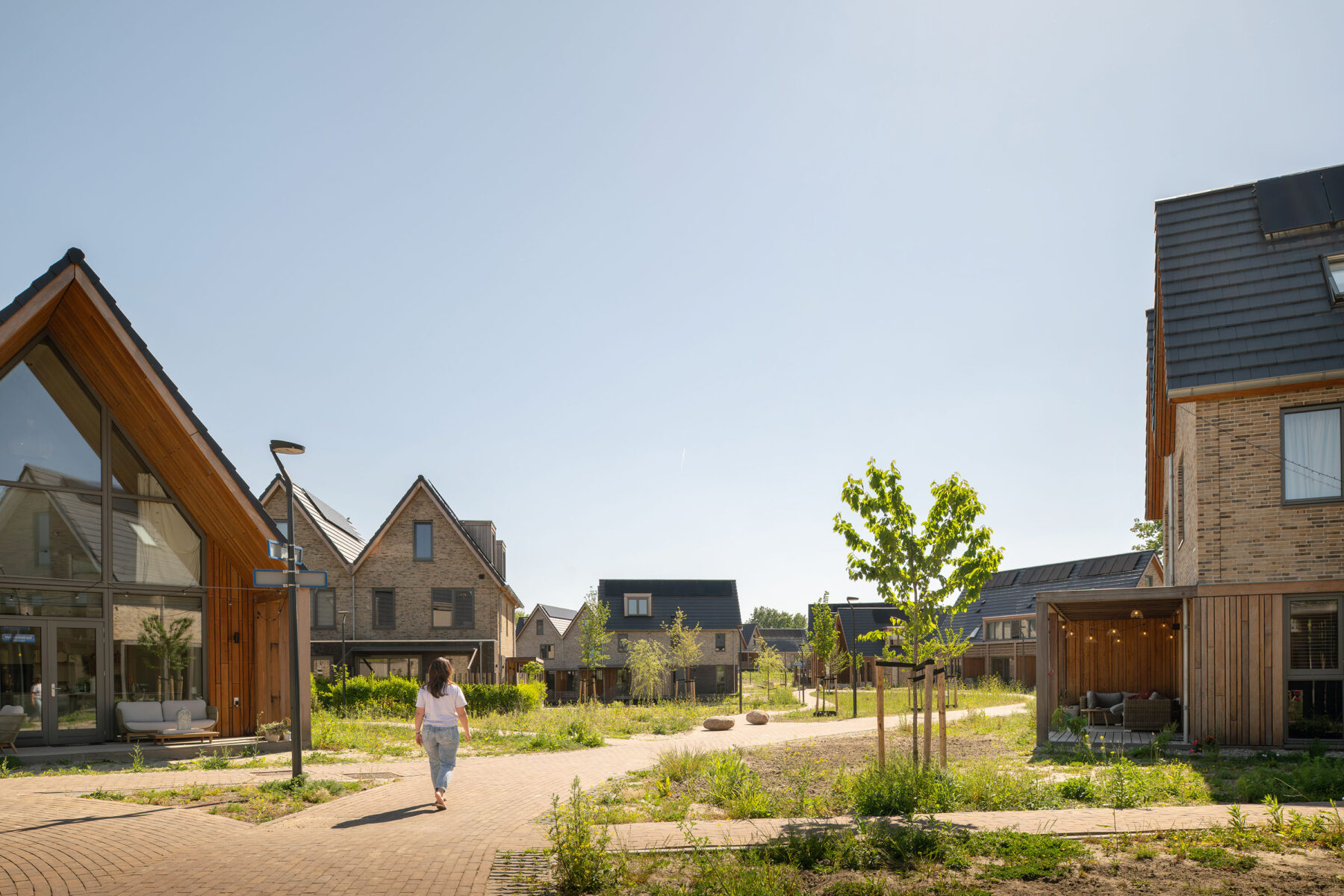
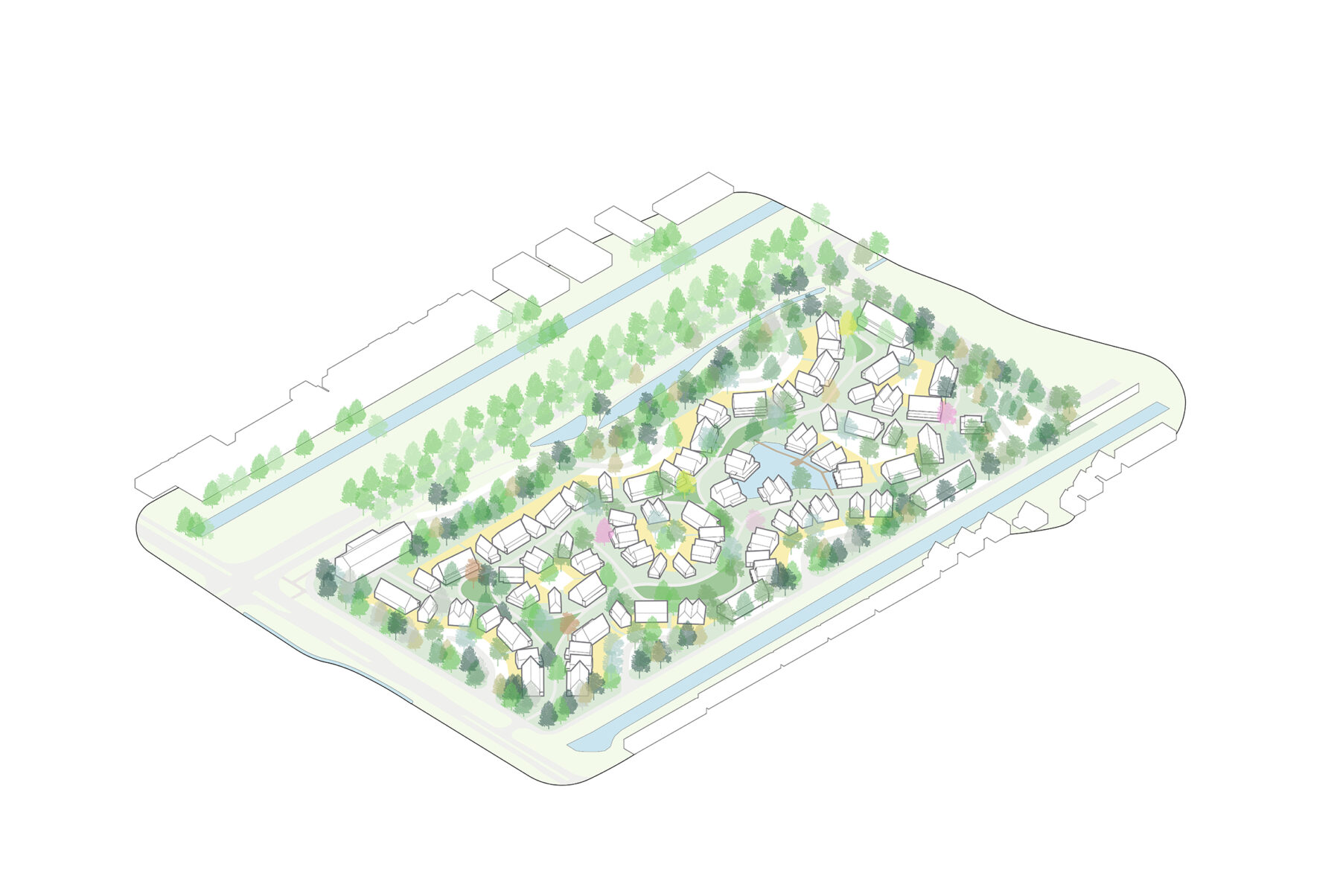
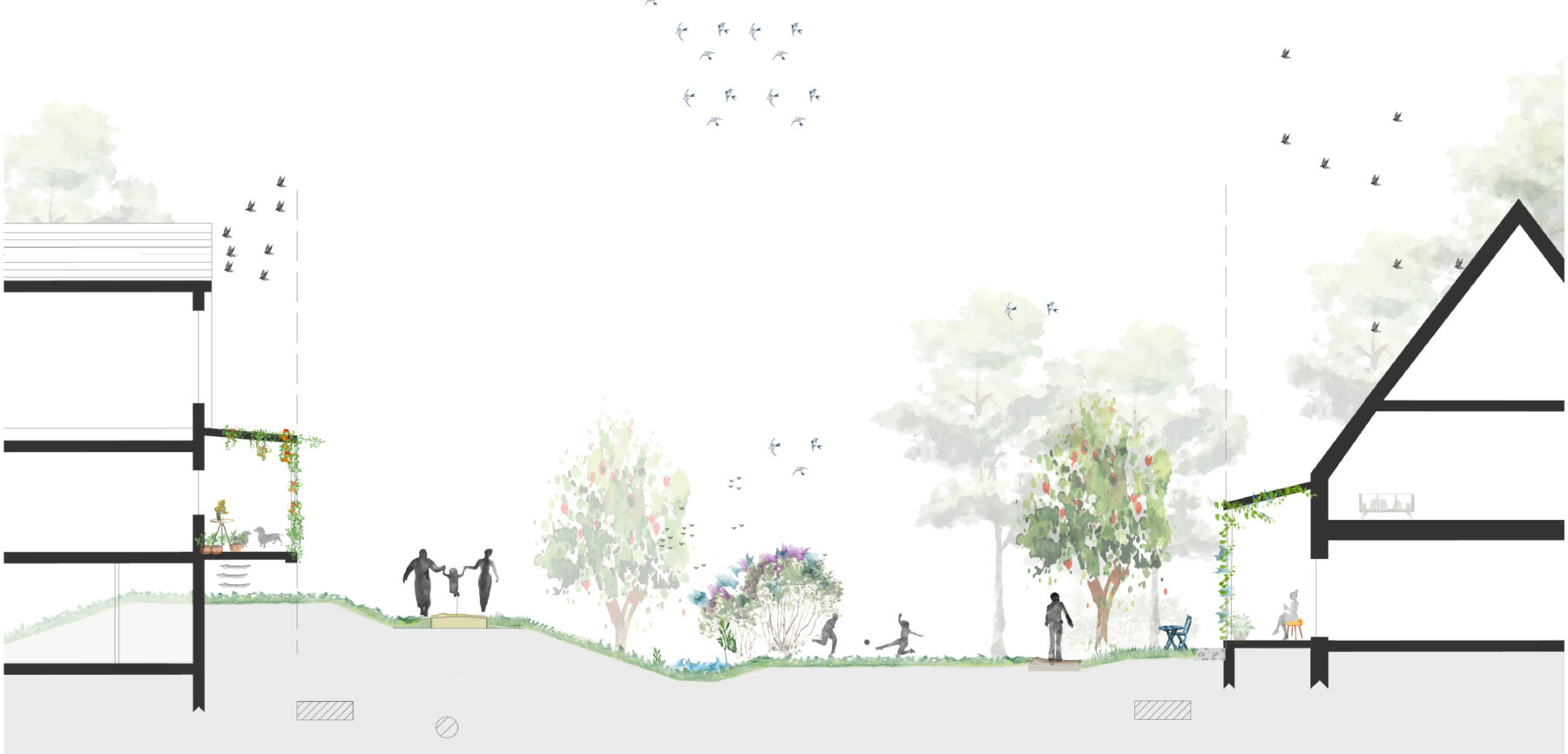
The foundation of the plan is formed by a densely planted earth berm that encloses the site. Within it unfolds a gently undulating, green, and car-free landscape. Small clusters of homes are arranged like islands within a continuous park setting. This creates ample space for shared use—playing, meeting, and relaxing. Cars are “banished” to the perimeter; a ring road outside the berm provides access to small parking courts at the rear of the homes.
In addition, two larger parking areas are located at the edge for visitors or second cars. These are situated at a greater distance from the homes. This makes it possible to create a unique residential environment where adventure and outdoor living take center stage. Themes such as nature inclusivity and climate adaptation are given full attention in the plan.
Living happiness
At the core of the design lies research into different lifestyles and into what contributes to residential happiness. The result is an inspiring and innovative living environment. Approaching concepts such as pleasure, meaning, and virtue within a spatial context is a challenge. In fact, these elements largely depend on human behavior and the activities people choose to undertake. However, these activities can be encouraged by the spatial environment—within one’s private domain, in the immediate surroundings with neighbors and friends, and ultimately in the public realm with people one barely knows or does not know at all.
Spatial and social Domains
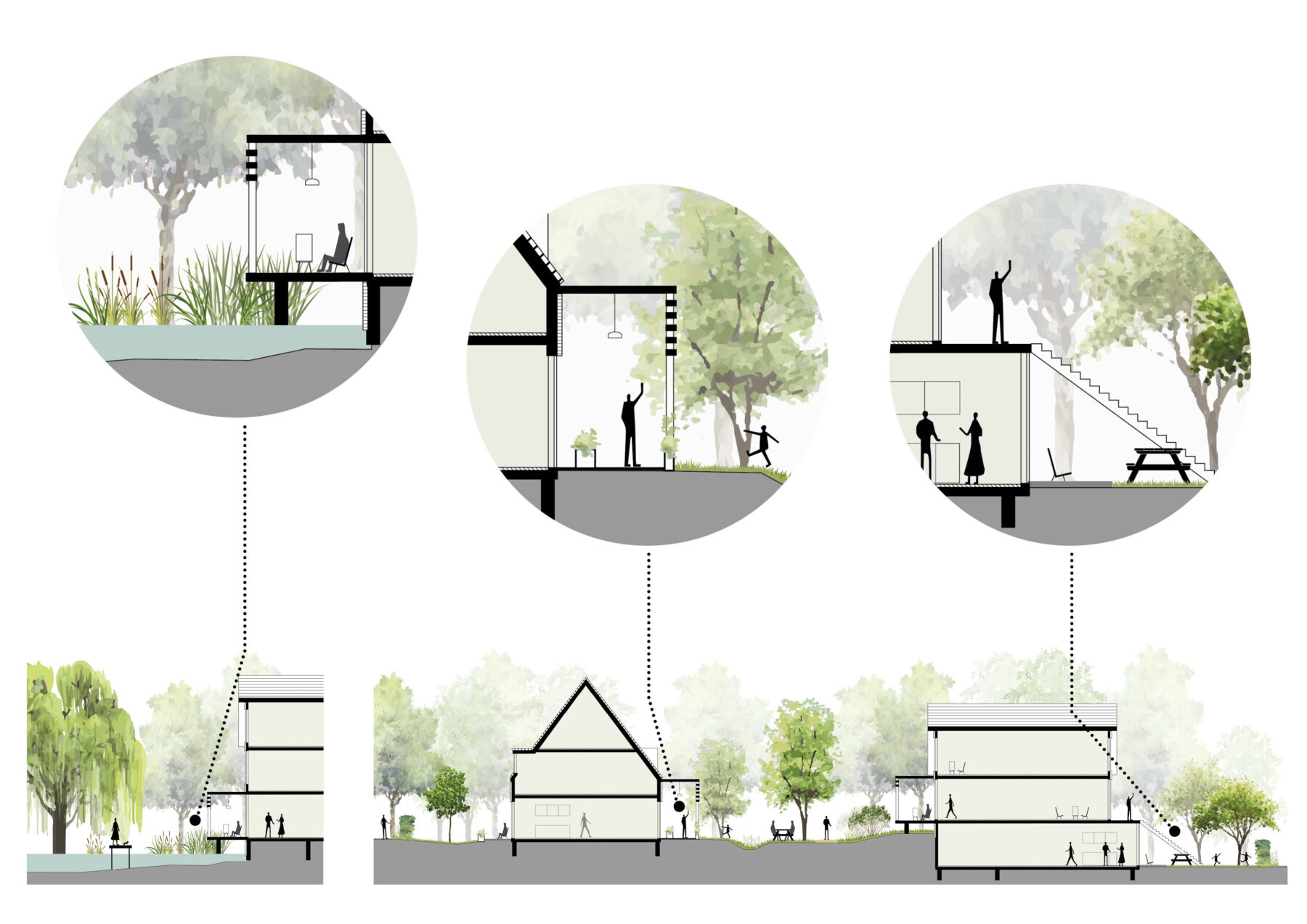
The perspectives of pleasure, meaning, and virtue are stimulated across four spatial domains and their transitions: the private domain, the collective domain, the semi-public domain, and the public domain. Many neighborhoods and cities have a stark division between private and public space, with relatively little in between. There is limited attention for transitions and for the semi-public and collective domains.
The opposite extreme can be found in a campsite or holiday park, where there are many intermediate domains between private and public space. Space is more informally claimed and overlaps more fluidly.
On holiday or at a campsite, people are more likely to engage with one another, share belongings, and participate in activities together—places where different domains of happiness are represented and balanced. The parochial and collective domains are also present here. Boundaries are less rigid and instead flow into one another, resulting in a very different experience of physical space compared to a typical residential neighborhood.
The challenge in designing a new residential area lies precisely in shaping the transitions between private (the home) and public space, allowing for rich interaction between the dwelling and the outdoor environment.
A year-round holiday feeling
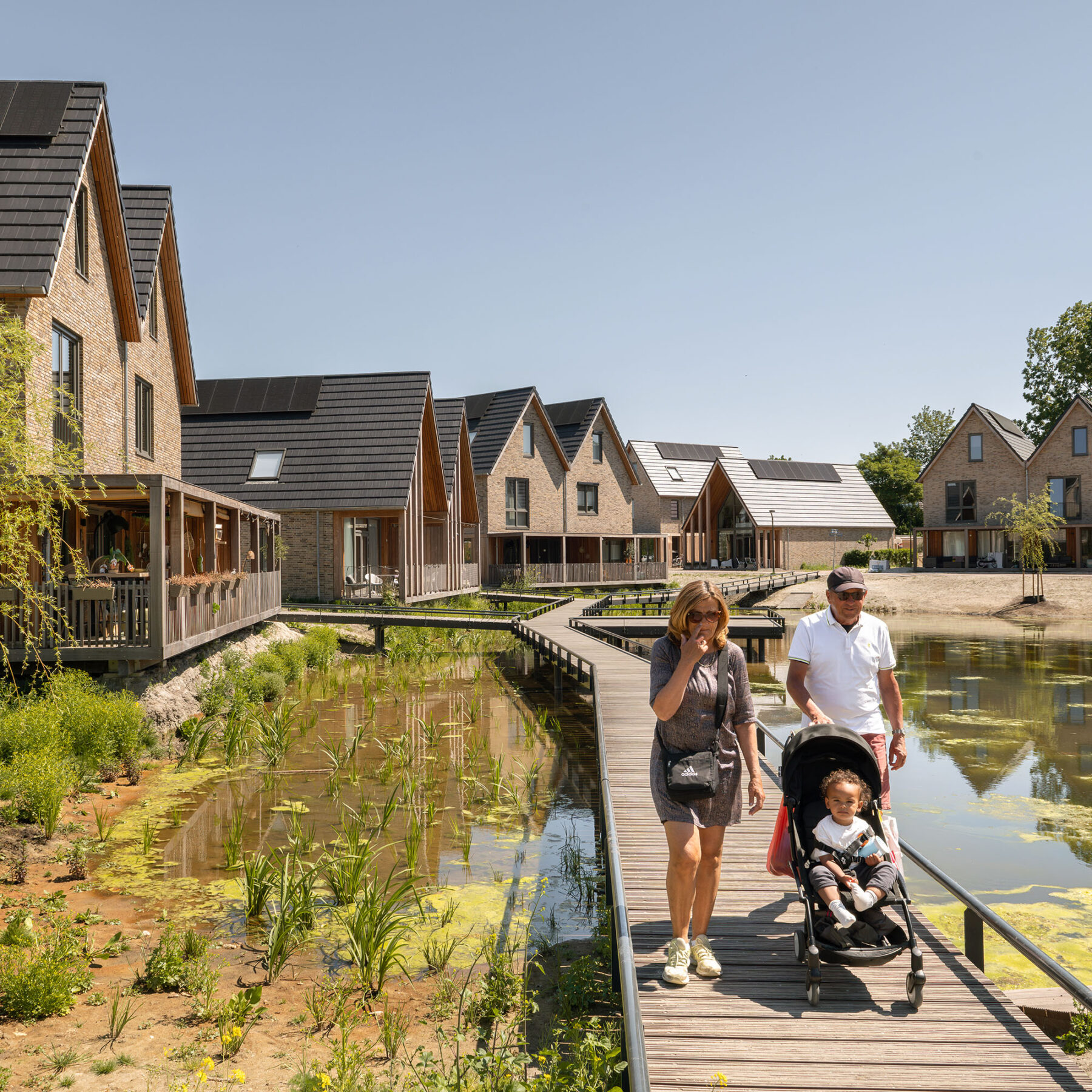
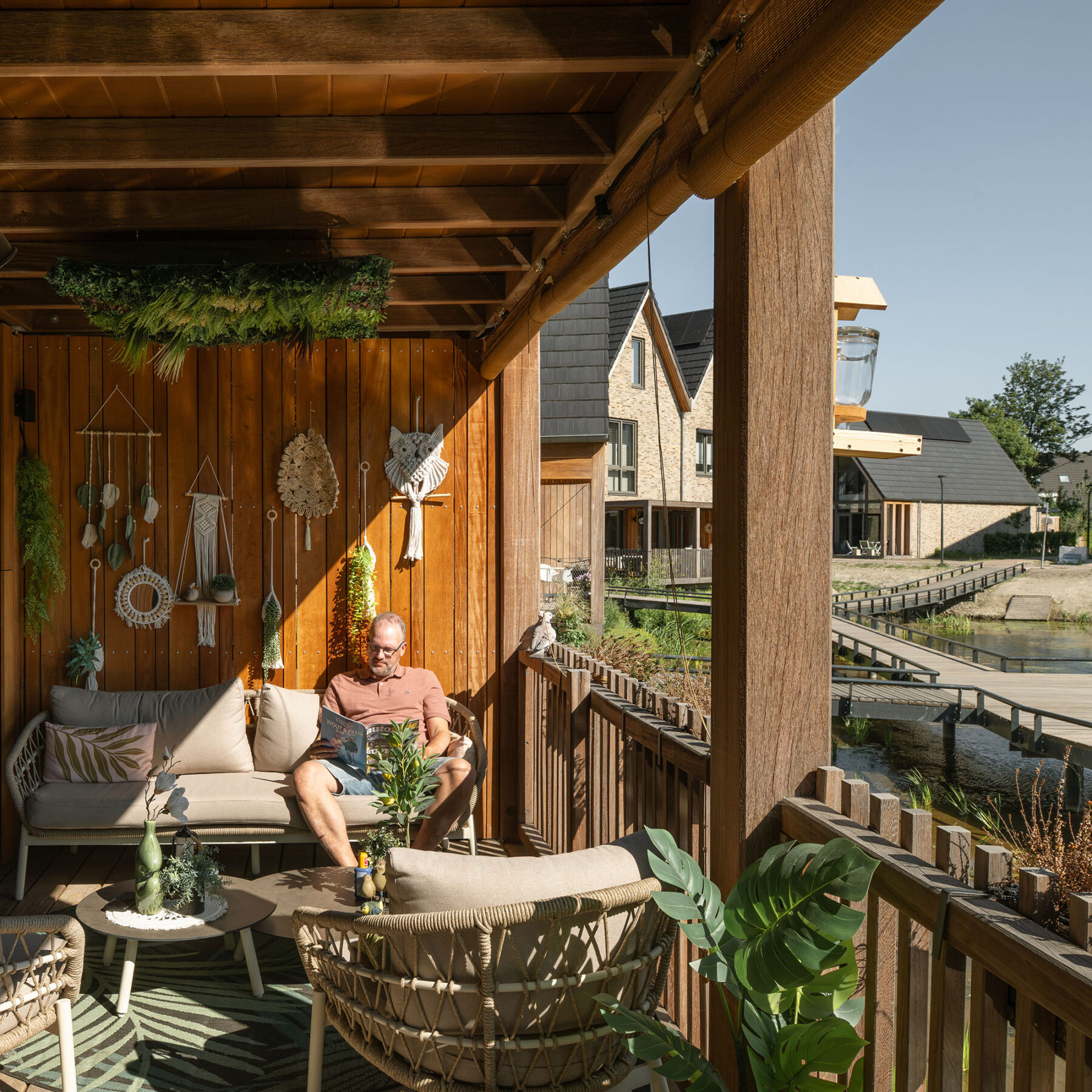
The sense of happiness associated with camping and being on holiday forms the basis of the “Happy Days” plan. This is reflected in all aspects: the free-form plot layout, the green landscape between the homes, the surrounding woodland edge, outdoor living, and the social interaction encouraged through various meeting places within the plan.
You have your own home, but you also share a large green park with your neighborhood, where you can engage in a wide range of activities: playing, walking, cycling, tennis, fishing, building huts, relaxing, and socializing.
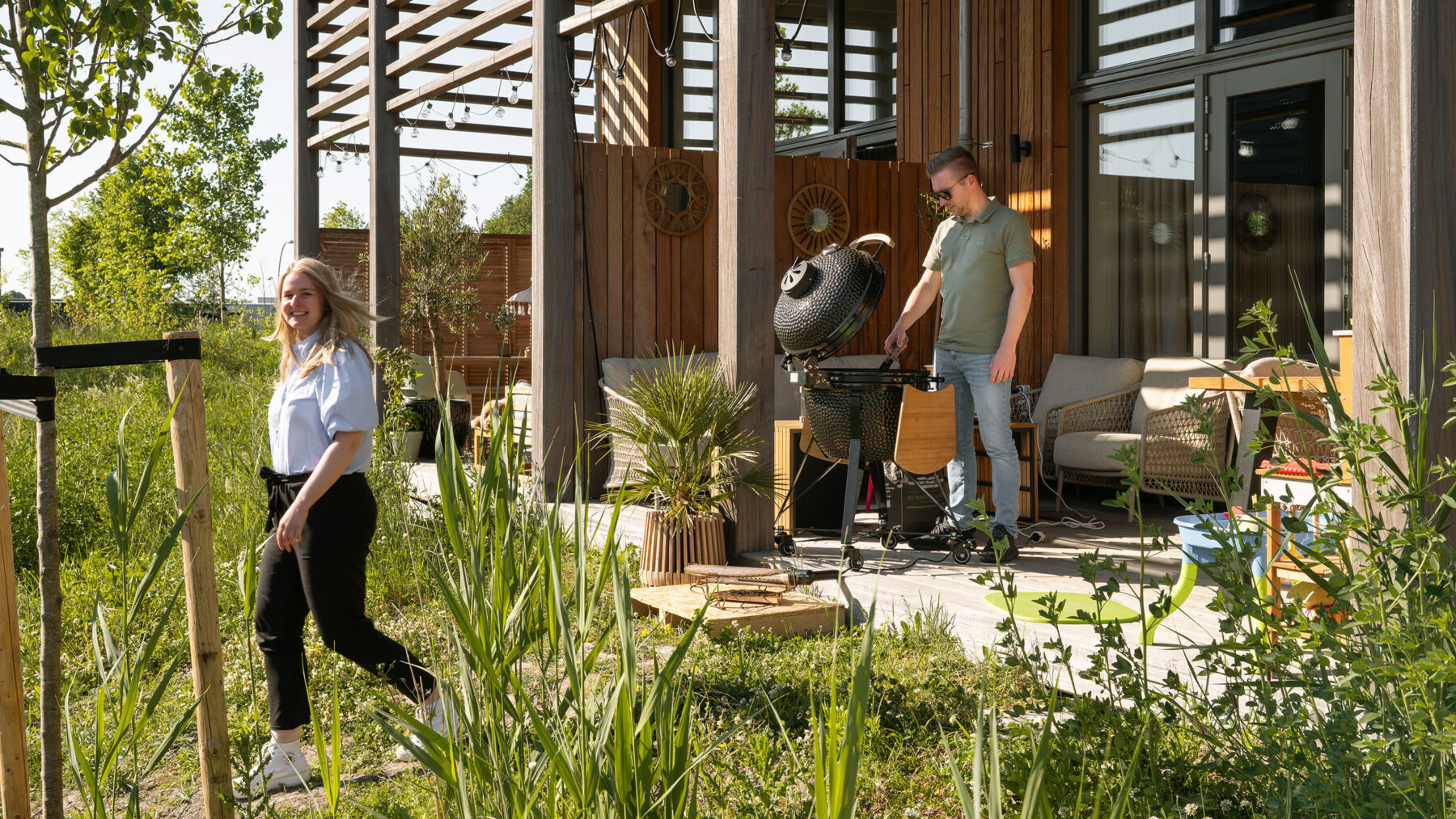
As on a campsite, the design includes picnic tables, space to play ball games, and opportunities to barbecue with neighbors in good weather. Happy Days is a residential area where a holiday atmosphere is actively encouraged, with a rich layering and an integrated approach to ecology, climate resilience, sustainability, social interaction, and activity.
It is a place where cars do not belong—a place where you can escape the hustle and bustle of the city and where everything revolves around being outdoors.
Biotopes and water system
The gently undulating landscape, with varying densities of greenery, is reinforced by linking it to different biotopes: a forest biotope along the edge, a rolling valley biotope, and a lowland biotope around the pond. The water system is naturally integrated; rainwater from roofs and paved surfaces flows across the surface into swales, where it can infiltrate or continue flowing toward the centrally located pond.
An overflow connection has been created between the pond and a nearby canal, used only in extreme conditions. The principle is that clean local rainwater remains within the area and does not mix with the eutrophic water from the canal.
Together, these elements support the different biotopes, each with its own specific plant and animal species. For each biotope, a so-called “ambassador species” is identified. For the forest biotope, for example, this is the common pipistrelle bat. This species requires specific conditions such as shelter, nesting opportunities, food sources, and ecological corridors. By optimizing the green design accordingly, a broader network of insects and birds is also supported.
Almost all homes incorporate nature-inclusive measures, such as integrated nesting boxes that align with the species associated with each biotope.
Architecture
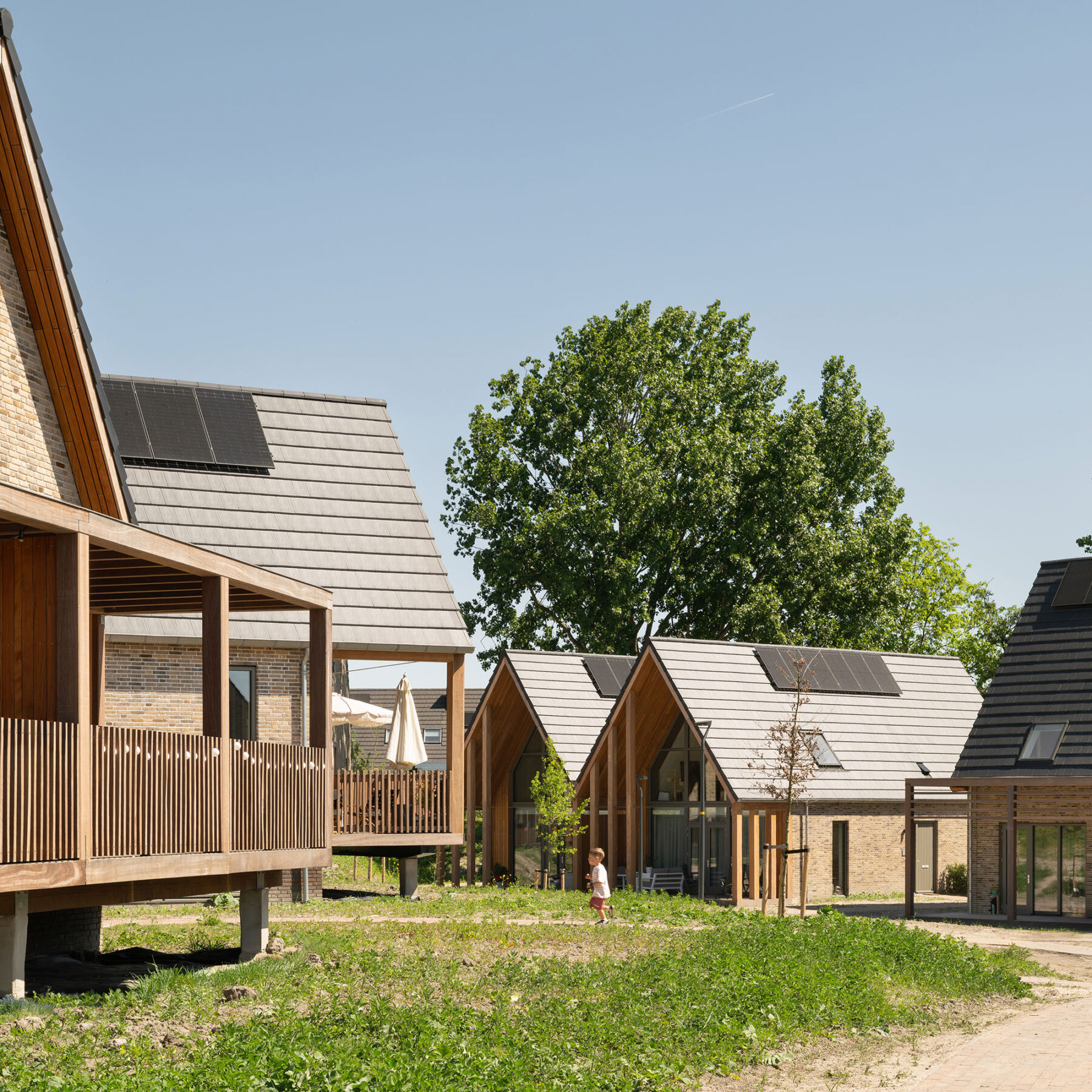
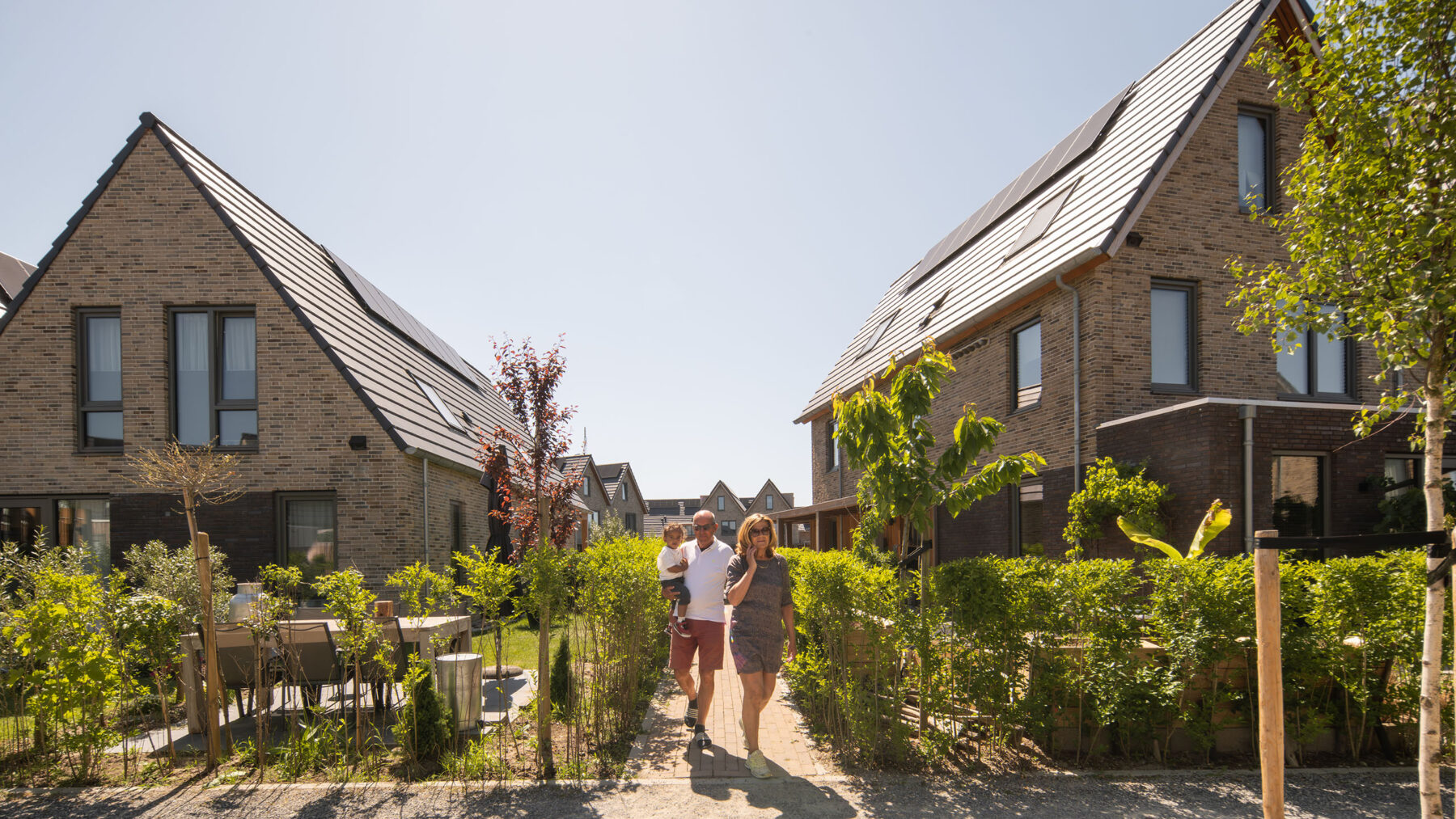
The architecture of the homes integrates naturally into the landscape. The houses have low-pitched roofs, giving them a friendly appearance. The verandas are constructed in wood, and in combination with light-colored brickwork, contribute to the natural character of the overall design.
Vrijbuiters
A unique aspect of the planning process is that, at an early stage (the beginning of the preliminary design phase), a group of potential residents was assembled under the name “Vrijbuiters” (Pioneers). An intensive process was carried out with this group, including information markets and multiple participation evenings.
From the outset, these participants were involved in the residential concept to foster a sense of ownership and connection to the plan. Because this way of living is non-traditional, it requires a group of residents who believe in such a concept. During the sales process, the “Vrijbuiters” were given priority.


Want to know more about this project?
Robbert Jan will tell you more about it!