Touwdraaier

The brief for this location was to develop a cohesive residential ensemble that integrates into the existing urban structure of the Scheldekwartier while simultaneously introducing its own distinct and recognizable identity. The plan was intended to contribute to a lively and social living environment, with space for interaction and collectivity, while also responding to the high demand for diverse housing types. In addition, there was a strong ambition to make sustainability, circularity, and climate adaptation an integral part of the design, and to strengthen the relationship with the water, the surrounding streets, and the maritime history of the site.

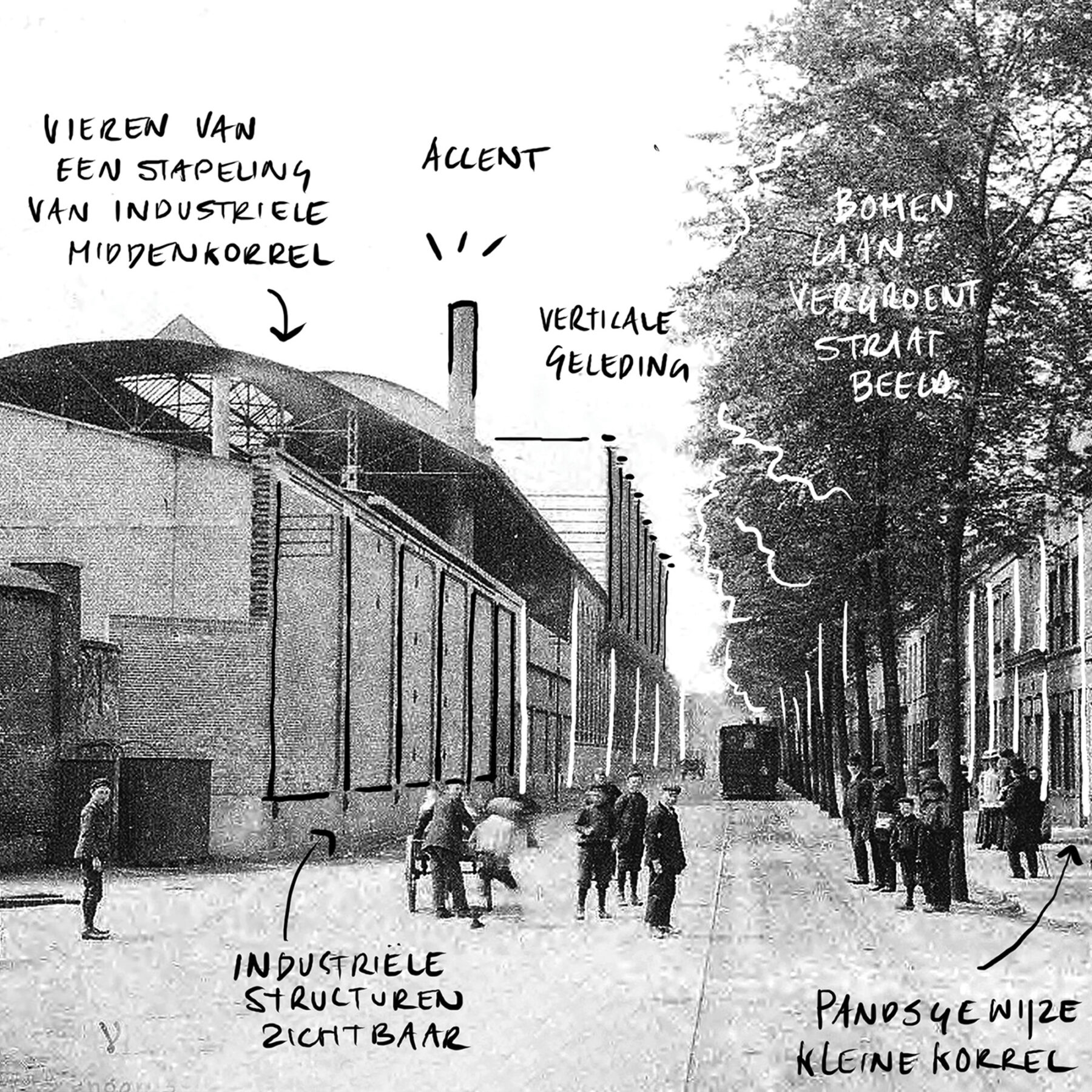
Design and development
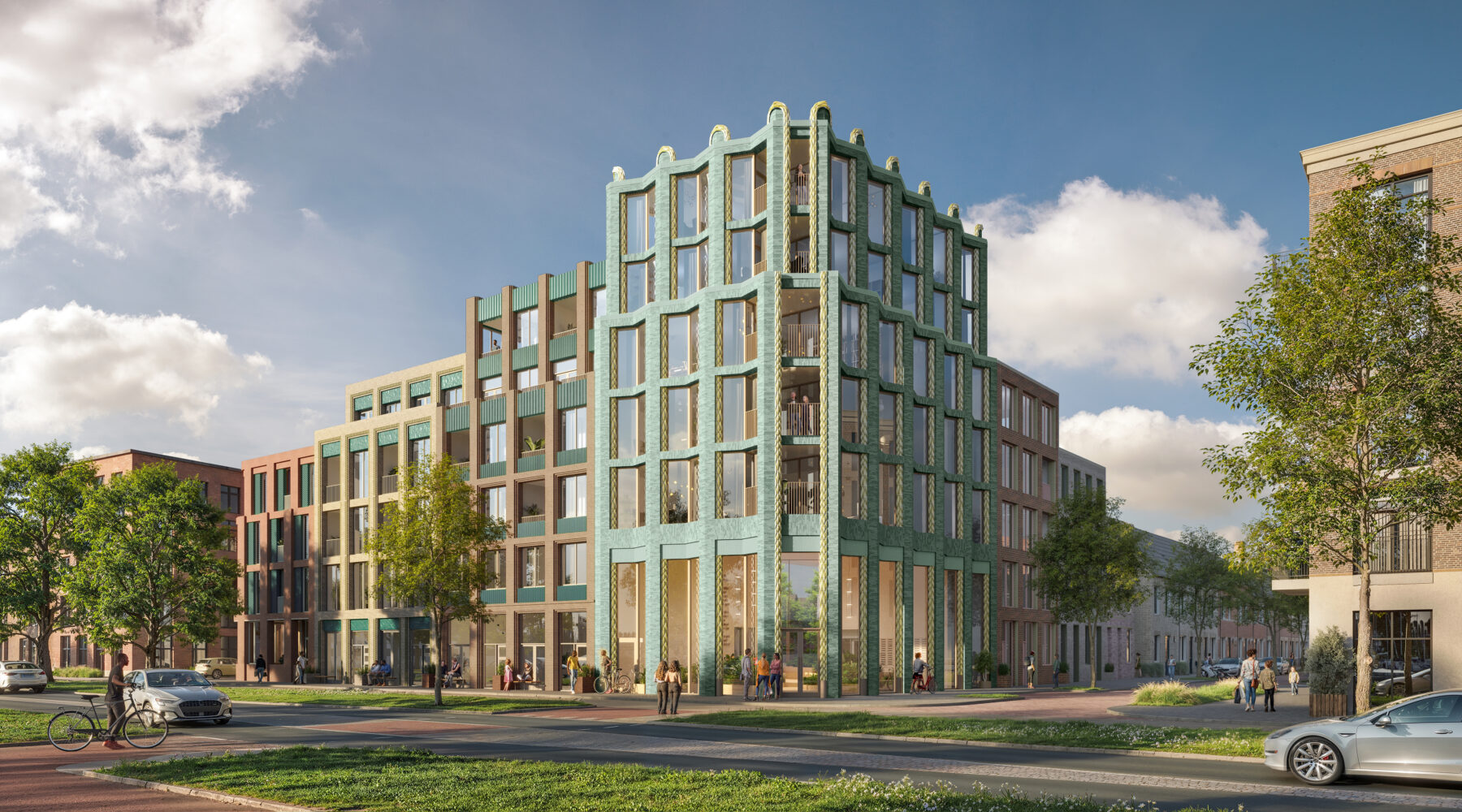
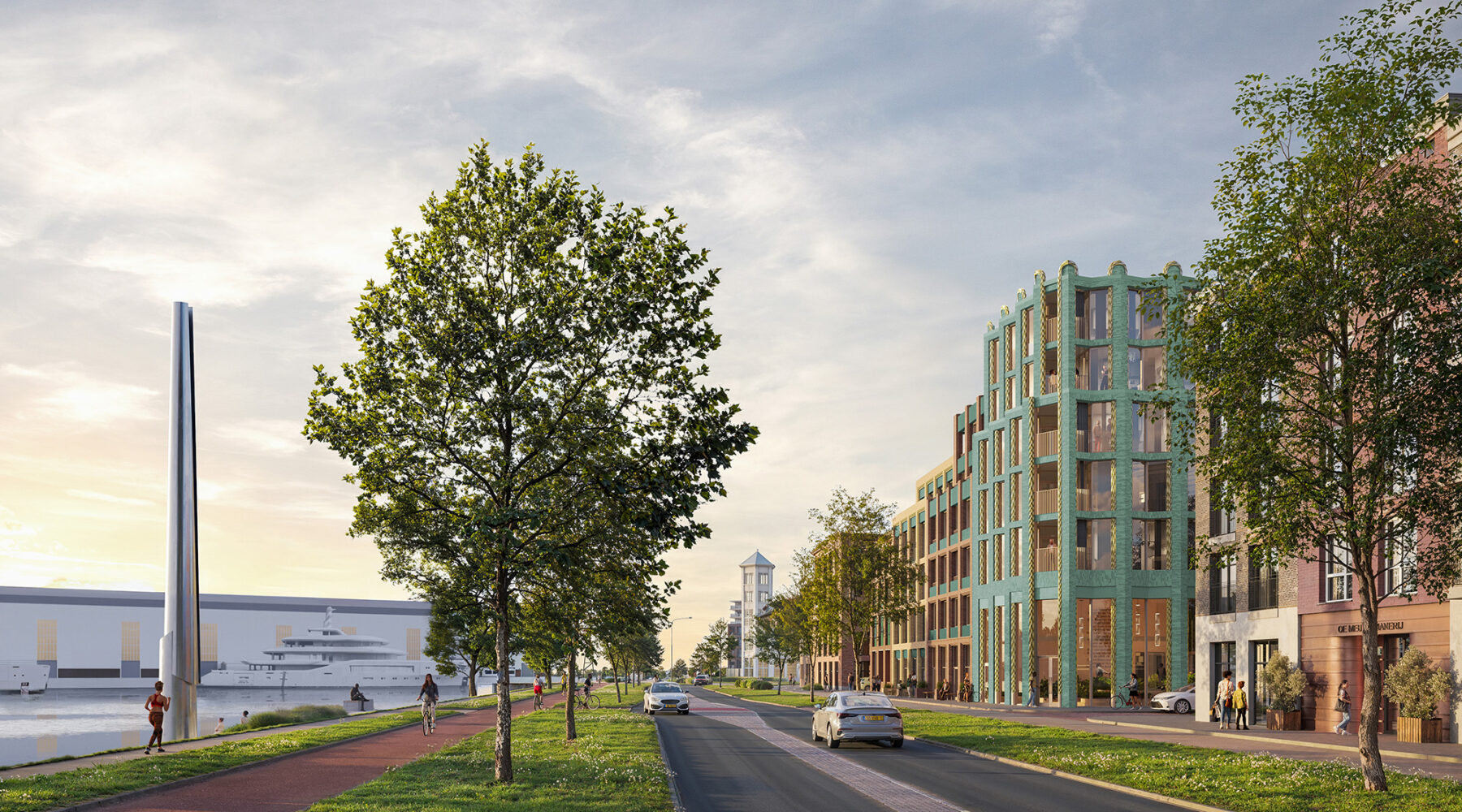
The urban plan for De Touwdraaier is conceived as a cohesive ensemble of buildings that integrates with the grain and structure of its surroundings, while simultaneously presenting itself as a new urban landmark along the canal. Through variation in building heights, setbacks, and materialization, a gradual transition is created from the surrounding streets to the water, with a distinct height accent at the corner serving as a recognizable feature in the city.
A system of collective spaces forms the backbone of the plan. The buildings are interconnected through a network of entrances, galleries, courtyards, and rooftops, creating a layered and interwoven living environment. The ground floors are designed to be open and transparent, with direct relationships between homes and the street, making everyday life visible and strengthening interaction with the public realm.
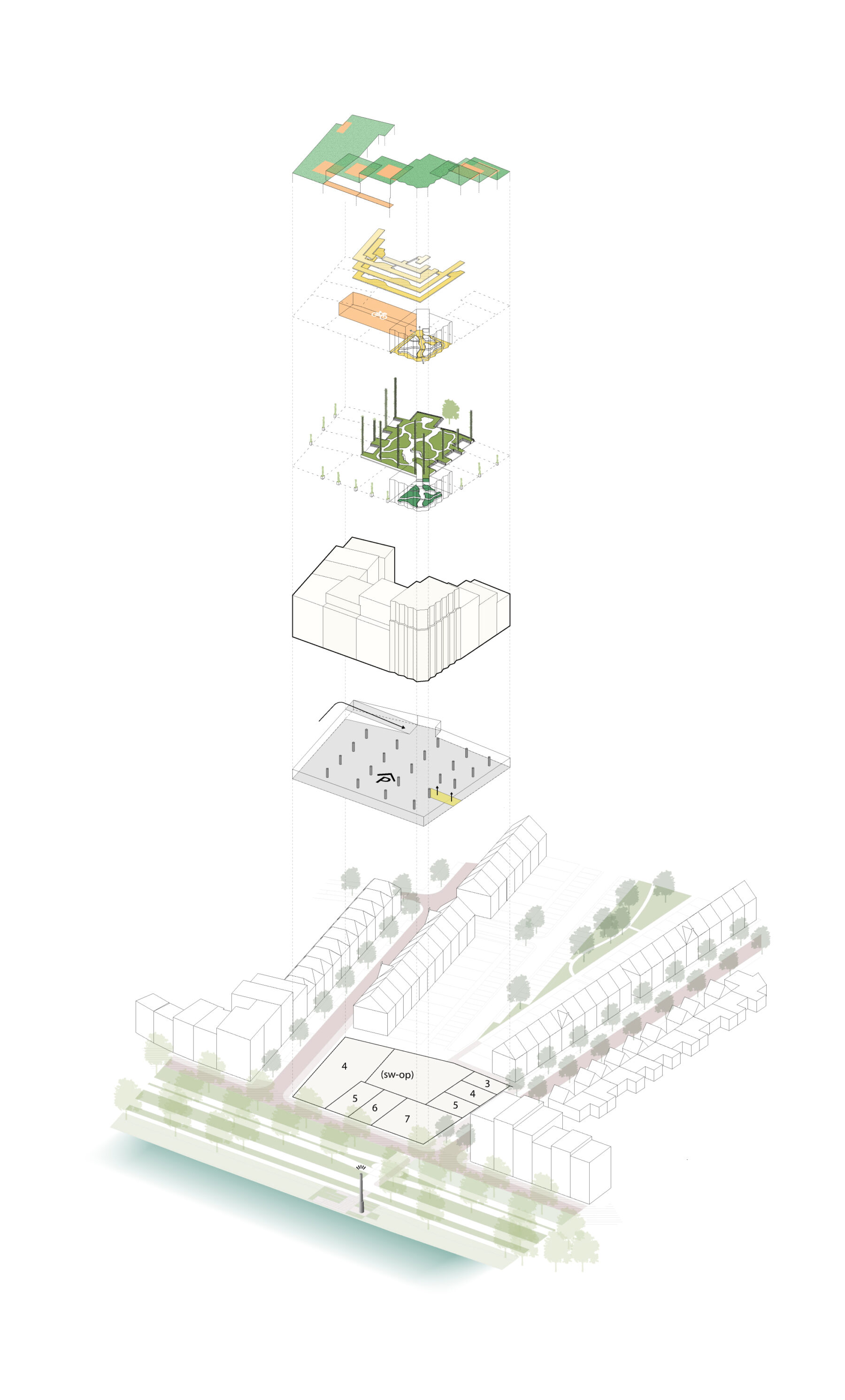
Use and social Functioning
De Touwdraaier offers a diverse residential program with 47 dwellings, distributed across various typologies and price ranges. This mix creates an inclusive living environment in which different target groups—from first-time buyers and families to seniors—come together.
The design encourages social interaction through a carefully composed network of shared spaces. The central entrance with a collective living room, the green inner courtyard, the galleries, and the communal bicycle storage all serve as places where residents naturally meet. At the same time, the homes and outdoor spaces provide sufficient privacy and tranquility.
The lively ground floors, street-facing dwellings, and informal transition zones such as Delft-style stoops contribute to an active streetscape and strengthen the relationship between the building and the city. This results in a living environment where interaction, everyday use, and urban vibrancy come together.
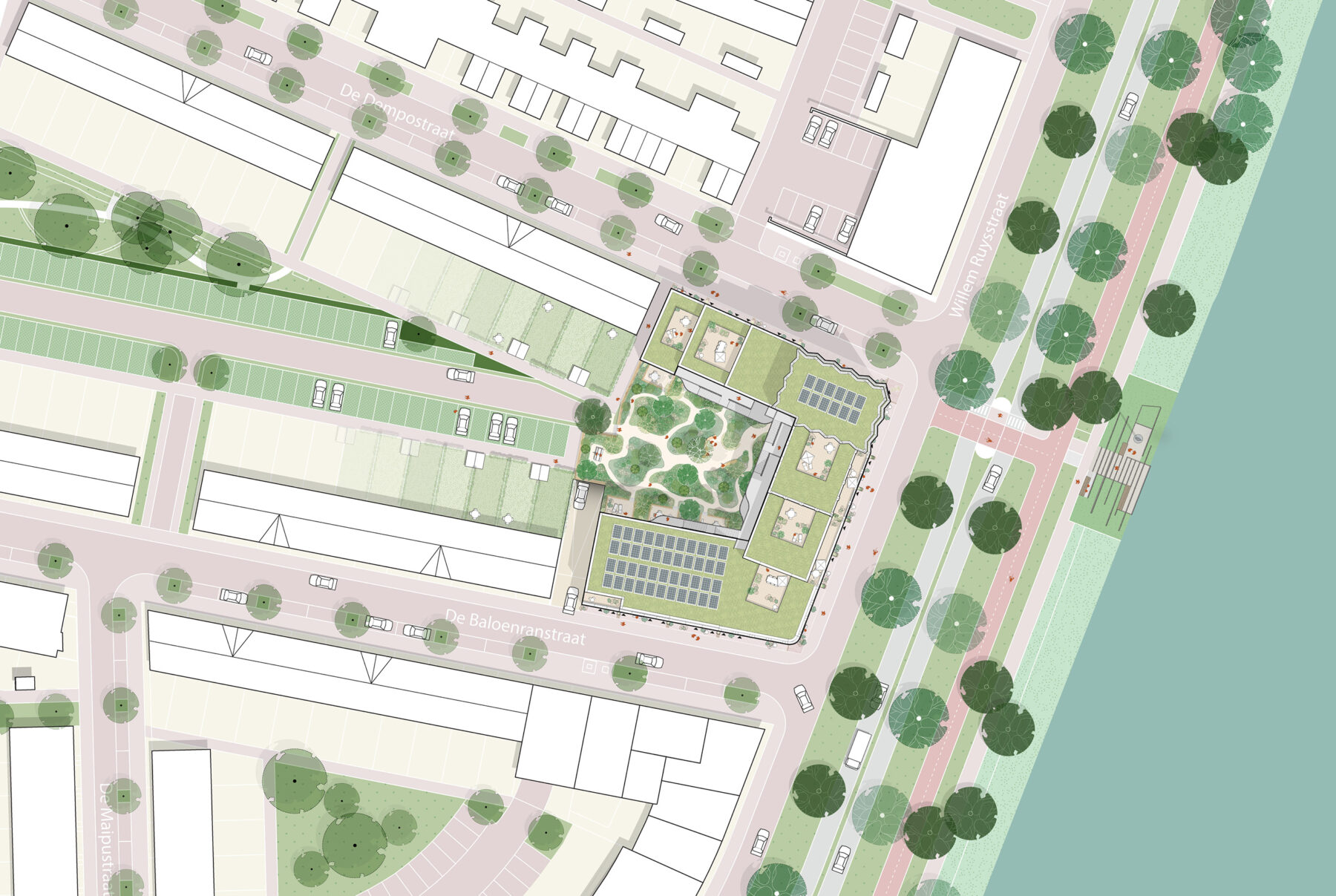
Landscape, sustainability and climate adaptation
Sustainability is an integral part of De Touwdraaier and is embedded in the design at all scales. The plan combines energy-efficient building principles with climate-adaptive and circular solutions, creating a future-proof living environment.
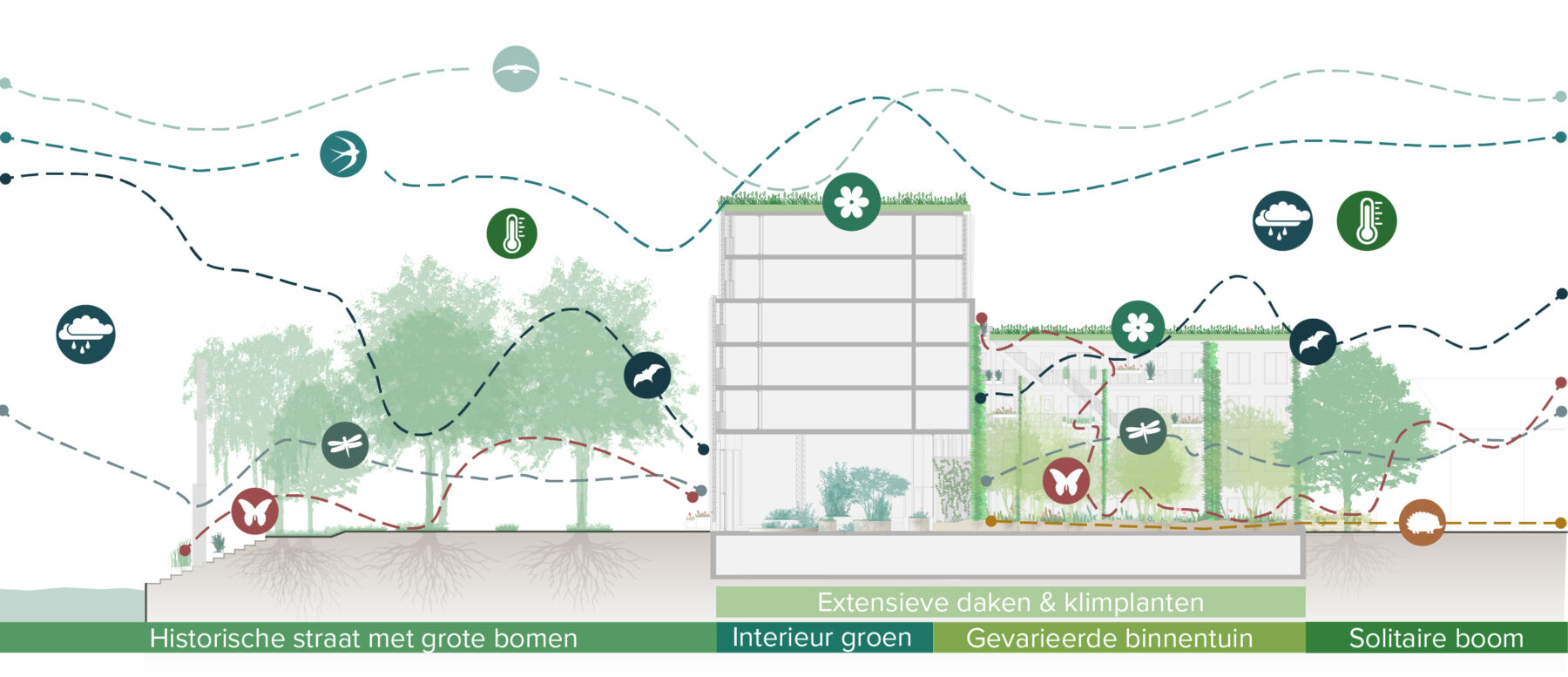
The buildings are equipped with high-quality insulation, green roofs, heat pumps and solar panels, achieving at least an A+++ energy label. Rainwater is captured, buffered and reused locally for planting, contributing to a robust and climate-adaptive water system. Circularity is also strongly emphasized at the material level. The use of biobased materials such as hemp insulation, circular bricks and reusable building components ensures a high degree of reuse and low environmental impact.
The green courtyard and roofs contribute to biodiversity and cooling. A rich planting scheme, combined with integrated nesting and habitat features for wildlife, creates a nature-inclusive living environment that connects to the surrounding ecological structure.
Process and collaboration
Touwdraaier has been realized through close collaboration between the developer, design team, and consultants. Within this integrated team, there has been a strong focus from the outset on coherence between urban planning, architecture, landscape, and engineering, ensuring that ambitions regarding quality and sustainability are embedded in all aspects of the plan.
The plan has been developed based on a thorough analysis of the local housing market and in coordination with stakeholders, including the municipality, consultants, and market parties. This collaboration will continue in the further elaboration, allowing the plan to be concretized step by step towards realization.
With Touwdraaier, a new residential environment is created in Vlissingen where architecture, landscape, and a sense of community come together. The plan provides a contemporary interpretation of the site’s maritime identity and contributes to a vibrant, inclusive, and sustainable urban development along the waterfront.




Want to know more about this project?
Nora Kooijmans would be happy to tell you more about it!